
Astribot raises RMB1B at RMB15B valuation following T1 robot launch
The Shenzhen company secures new capital for AI models, commercialisation and manufacturing after introducing its lower-cost T1 platform.
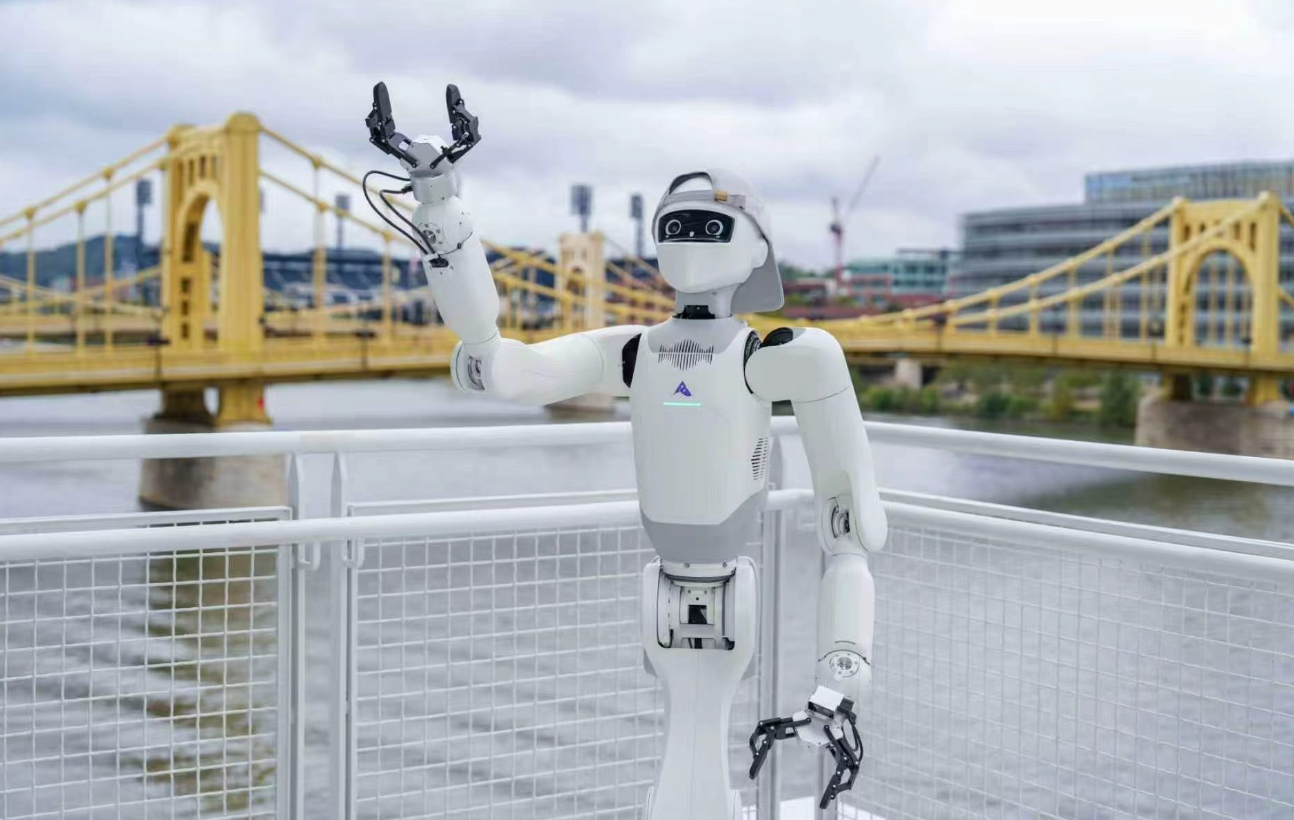
Shenzhen-based Astribot (星尘智能) has completed approximately RMB1 billion ($140 million) in new financing at a reported RMB15 billion ($2.1 billion) valuation, bringing its fundraising activity to four rounds in roughly six months. The investment was led by Toukong Donghai, affiliated with state-owned Shenzhen Investment Holdings, with participation from Hongtai Fund, funds managed by Guanghua Sunshine, Shanheng Capital and existing investor Xianmu. Astribot plans to allocate the capital to AI model development, recruitment, commercialisation and manufacturing capacity. The financing follows more than RMB1 billion raised across its Series B financings announced in June, when its valuation exceeded RMB10 billion.
Founded in 2022 by a team originating from Tencent Robotics X, Astribot develops cable-driven robots combining manipulation hardware, embodied AI models and its own operating system. In May 2026, it introduced the lower-cost T1, a 1.55-metre, 66 kg wheeled humanoid with 23 degrees of freedom excluding end effectors and a 5 kg payload per arm. The robot launched in China from RMB89,900, with deliveries scheduled to begin in June. Astribot subsequently presented T1 in North America at IROS 2026 in Pittsburgh, announcing US pricing from $18,000 and immediate delivery availability. Its earlier S1 platform remains positioned for robotics research, model development and commercial manipulation applications.
Astribot reports thousand-unit-scale orders for its S-series robots and combined S- and T-series production capacity at the ten-thousand-unit scale. Its disclosed commercial activity includes robot-operated retail service locations across six Chinese cities and partnerships targeting retail, tourism, industrial and research applications. The order and capacity figures are company-reported and do not establish equivalent volumes of completed customer deliveries. The latest financing is intended partly to expand manufacturing as Astribot develops its commercial service business and provides robot platforms to external AI developers.
The company has also expanded its robot-learning research alongside the hardware rollout. Its Lumo-2 model, introduced in July, uses latent world-action modelling to generate robotic actions from learned representations of physical dynamics. In September, Astribot published SmoothRL, an online reinforcement-learning framework designed to improve robot policies during asynchronous physical execution; the accompanying preprint was submitted in August. Experiments on the S1 included object throwing, pen-capping and box-opening tasks, with the company reporting improved success rates after training. At IROS, Astribot also demonstrated T1 manipulating and packing miscellaneous objects using Lumo-2, alongside developer tools for joint control, whole-body coordination and teleoperation.