
Boston Dynamics redesigns Atlas hands as Hyundai prepares humanoid for factory work
Atlas’s new four-finger hand targets manufacturability and dexterity as Hyundai trains the humanoid for planned factory deployment.
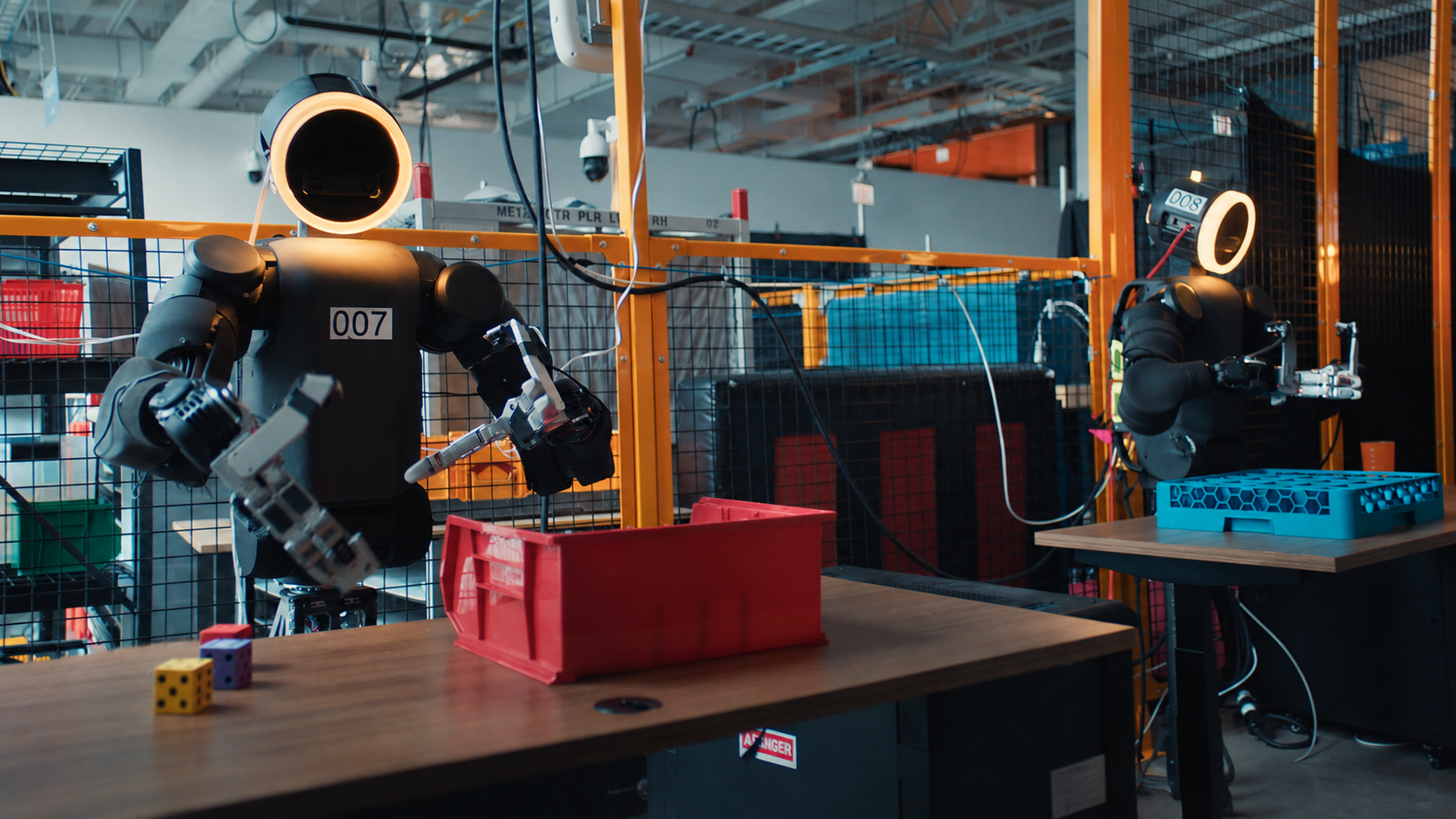
Boston Dynamics has redesigned the hands on its Atlas humanoid as the company pushes the platform toward industrial deployment, balancing dexterity and strength with a design intended for large-scale manufacturing. The new four-finger hand is designed to be accurately simulated, supporting manipulation behaviours learned through reinforcement learning.
The change reflects Atlas’s move from a research platform toward a production robot. Boston Dynamics says the previous three-finger hand supported demanding manipulation but was not designed to be manufactured in volumes reaching tens or hundreds of thousands of units. The new hand increases degrees of freedom from seven to 13, adds finger splay for tool handling, and uses replaceable actuator packs without tendons or cables running across joints.
That hardware development is running alongside real-world training at Hyundai Motor Group’s Robotics Metaplant Application Center in Georgia. Atlas robots are being trained and validated on automotive manufacturing work including parts sequencing and material handling, with successful and failed attempts fed back into the robot’s AI models as part of a continuous training loop.
Hyundai plans to begin deploying Atlas for parts-sequencing work at Hyundai Motor Group Metaplant America in 2028, followed by expansion into component assembly from 2030. The group has positioned RMAC as the intermediate step between robot development and production-line deployment, allowing Boston Dynamics to train and validate behaviours under conditions designed to resemble real manufacturing operations.
Atlas’s industrial design includes autonomous operation, tactile sensing, a 50 kg peak lifting capacity and self-swappable batteries. The new hand is intended to support dexterous manipulation while meeting the durability, repairability and manufacturing requirements of factory deployment at scale.