
Dexory tests NVIDIA Halos and expands warehouse storage analysis
Dexory is evaluating Halos for robot safety while adding Cosmos-Reason2-2B to DexoryView’s storage-condition analysis.
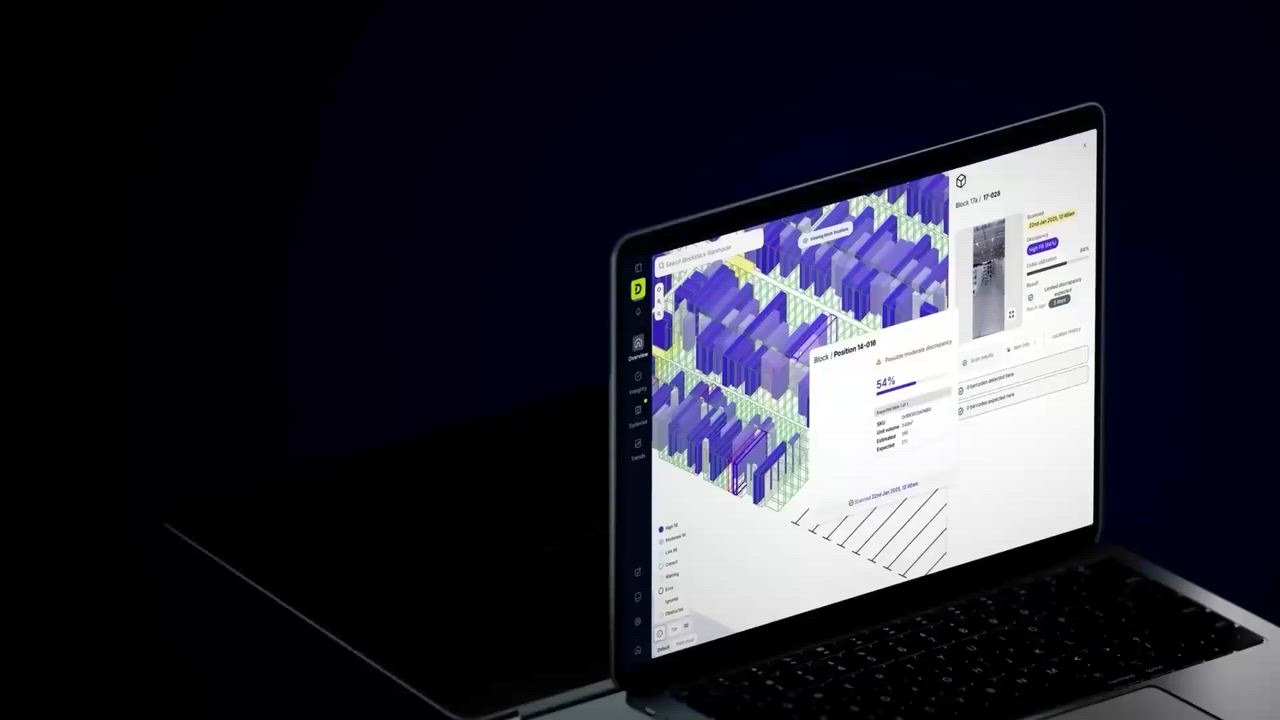
Dexory is testing NVIDIA Halos and IGX Thor for autonomous warehouse robots, with plans to combine AI processing, functional safety and perception in a single-board architecture. Announced on 21 October, the work draws on the company’s experience operating mobile scanning robots alongside people, forklifts and other warehouse equipment.
Halos brings safety-oriented computing and software into the design of the robot’s onboard system. Dexory is evaluating it for what the company describes as inside-out safety, using the robot’s processing and perception capabilities to support operation in changing surroundings. A rollout across its international fleet is planned after development and testing.
Dexory separately expanded DexoryView’s Storage Health analysis with NVIDIA Cosmos-Reason2-2B. The feature examines high-resolution images collected during warehouse scans to identify conditions such as open boxes, goods protruding from expected positions and misaligned pallets, including on high or densely packed racks.
The model accepts natural-language prompts and adds a further assessment when an existing detector produces a low-confidence result. Dexory fine-tuned it on warehouse imagery and evaluated both the 2B and 8B versions of Cosmos-Reason2. It selected the 2B model for production based on its balance of accuracy and deployment efficiency, testing the approach with data from multiple warehouse sites.
DexoryView uses the scanning fleet to update a digital record of inventory and storage conditions. Storage Health extends what the collected images can reveal about racks and goods, while the Halos programme develops the onboard architecture of the robots gathering that information.