
Dexterous hands at scale
Linkerbot is producing nearly 5,000 dexterous robotic hands a month and claims 80% of the high-DOF market.
Linkerbot is interesting because it sits in a narrow part of robotics that usually gets treated as a subsystem.
Linkerbot claims more than 80% global market share in high-degree-of-freedom robotic hands. It manufactures joint modules, motors and reducers in-house and collects manipulation data across its customer base. Specialist suppliers such as Harmonic Drive and Maxon similarly sell components across multiple robot manufacturers.
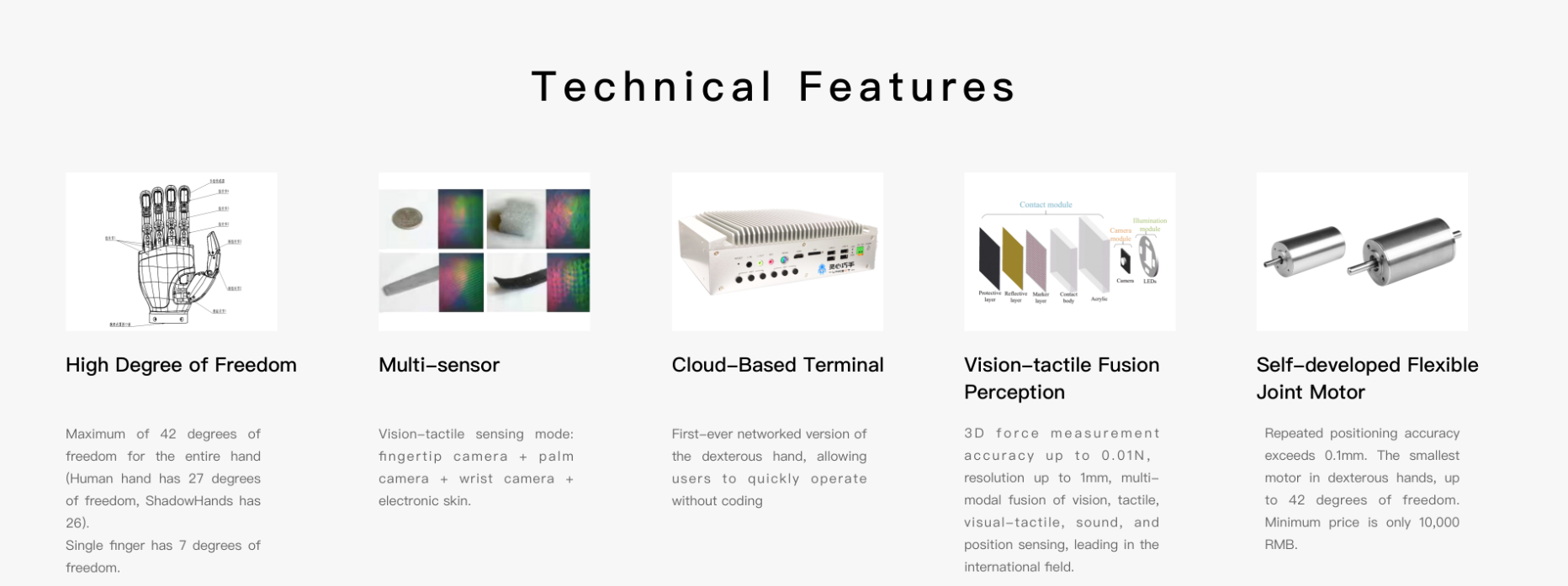
The engineering problem it is solving is underappreciated relative to the attention the full humanoid body receives. A human hand has approximately 27 degrees of freedom. Most commercial robotic grippers have between one and six. That gap is the difference between a robot that can move a box and one that can thread a needle, turn a screw into a recessed hole, or handle deformable materials without crushing them. Many companies building humanoids have either deprioritised the hand or described it as one of their hardest subsystems.
Reuters In an exclusive report this week shared that Linkerbot produces nearly 5,000 high-DOF hands per month across five factories in Beijing and Shenzhen, and plans to scale toward 10,000. The company delivered over 10,000 units across 2025. Customers include Cambridge, Stanford, Peking University and Tsinghua, alongside undisclosed industrial operators.
Linkerbot delivered over 10,000 hands across 2025; it now says it is producing nearly half that number every month.
Customers also mount Linkerbot hands on existing industrial arms. In a Reuters interview, Zhou said many Chinese factory owners need two arms and dexterous hands for their tasks, without a full humanoid body.
LinkerSkillNet is the second layer of the business; a multimodal data collection system that converts human manipulation into standardised reusable robotic capabilities, currently holding over 500 skills, with Zhou expecting the library to double every six months. The stated goal is one million hands mastering one million skills. Each hand deployed in a new environment feeds real-world data back into the platform.
On funding, Linkerbot raised RMB 1.5 billion, approximately $210 million, in February 2026, then closed a Series B+ last week at a $3 billion valuation backed by Zhongguancun Science Park Fund, Bank of China Asset Management and Fosun Capital, with Ant Group and HongShan as earlier investors. The company is already targeting $6 billion in its next financing. For context, Unitree, one of the highest-volume full humanoid manufacturers, filed for a Shanghai IPO in March to raise about $610 million. It was previously reported that Unitree had been eyeing an IPO valuation of up to $7 billion.
Alex Zhou founded Linkerbot in 2023 after developing the idea from 2018–2019. He graduated from Huazhong University of Science and Technology’s Youth Class at fourteen. His previous company reached 300 million users, fewer than 1% of them in China.
Have a robotics update Korthos should review? Send news, deployments, product releases, funding rounds, research, or media to [email protected] or reach out on X at @agkorthos.