
Gecko Robotics to bring robotic inspection into Anduril submarine production
Robotic non-destructive testing and digital inspection records will support Anduril’s California protofactory and planned Arsenal-2 shipyard.
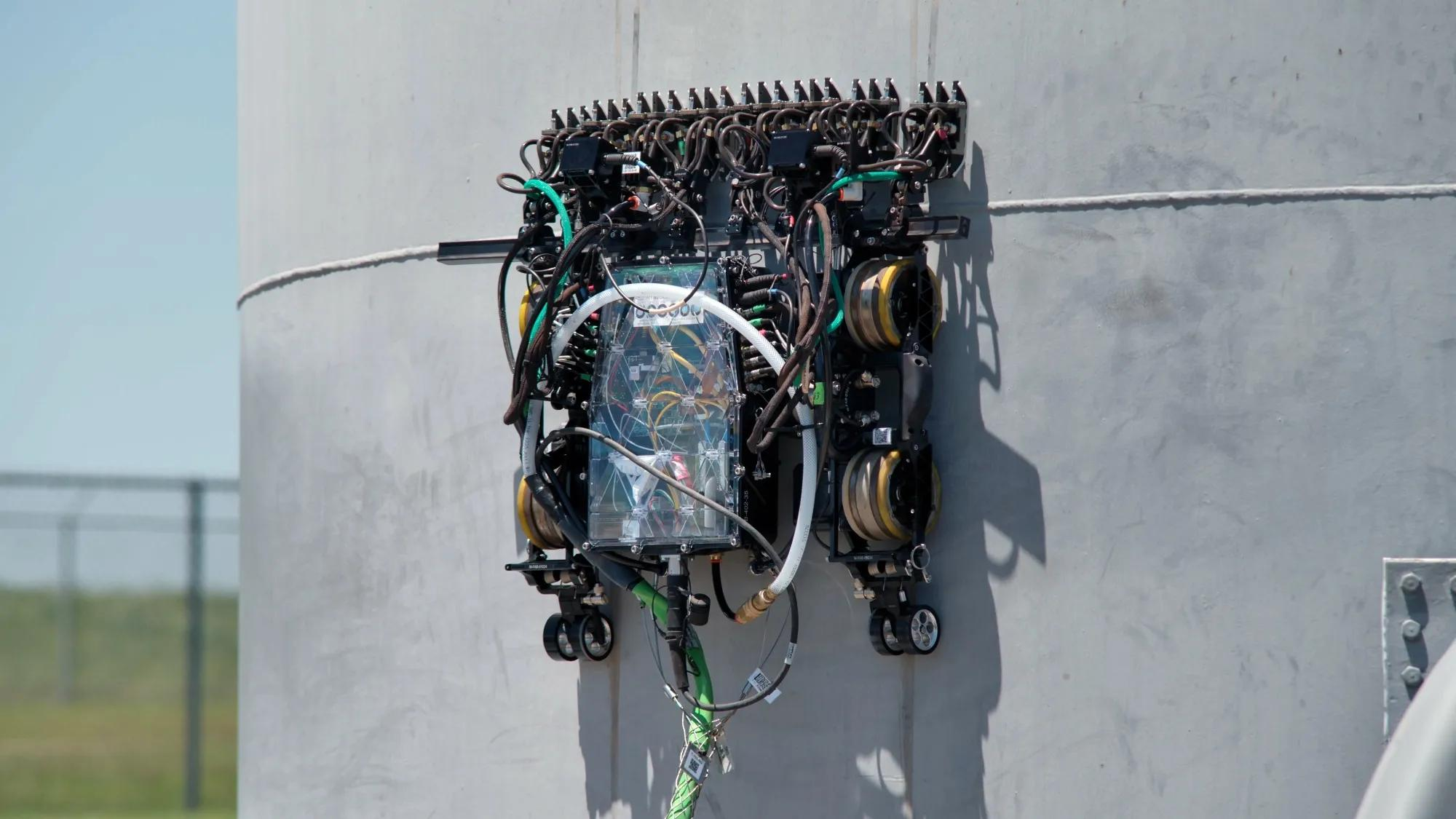
Gecko Robotics will deploy robotic non-destructive testing, AI inspection software and automated quality assurance inside Anduril’s submarine manufacturing programme, beginning at its new 160,000 sq ft Orange County protofactory and extending to the planned Arsenal-2 shipyard in Maryland. Gecko’s systems are already being integrated with ArsenalOS, Anduril’s manufacturing software, as the California site begins producing components for the Virginia-class submarine programme.
Gecko will inspect newly manufactured submarine components and retain the measurements as a digital record through production and later service. The company says comparable work elsewhere in the defence industrial base has reduced forged-component inspection timelines by up to 90%. It also claims workers without previous non-destructive-testing experience can become productive on its system after about one hour of training. Those figures concern existing programmes, rather than results from Anduril’s facilities.
Anduril announced Arsenal-2 on October 6 as part of more than $3.7 billion in private investment in submarine manufacturing. The Maryland facility is planned at more than 2 million sq ft, targeting complex components and large assemblies for Virginia-class submarines. The U.S. Navy separately awarded Anduril a contract worth up to $2.9 billion, with payments tied to production outcomes.
The partnership adds new-build quality inspection to Gecko’s existing naval work. In March, the U.S. Navy and GSA awarded Gecko a five-year IDIQ with a $71 million ceiling, beginning with 18 Pacific Fleet ships under an initial award worth up to $54 million. Gecko’s wall-climbing robots, drones and fixed sensors inspect hulls, decks, welds and submarine components, feeding physical-condition data into its Cantilever software platform. The IDIQ ceiling is not a guaranteed revenue commitment.
A January partnership with Trident Maritime Systems covers 20 fabrication facilities supplying Navy components and systems, with the companies targeting at least a 40% increase in production throughput. A 2025 programme with BPMI applied Gecko’s robotic inspection to components for nuclear-powered submarines and aircraft carriers, where initial trials reduced forged-component inspection spans by up to 90%.