
Hesai launches Kosmo spatial camera and 3D world-data platform for robot training
Kosmo One combines lidar, an 8K imaging sensor and cloud reconstruction, with Galbot and Dexmal partnerships and early humanoid customers.
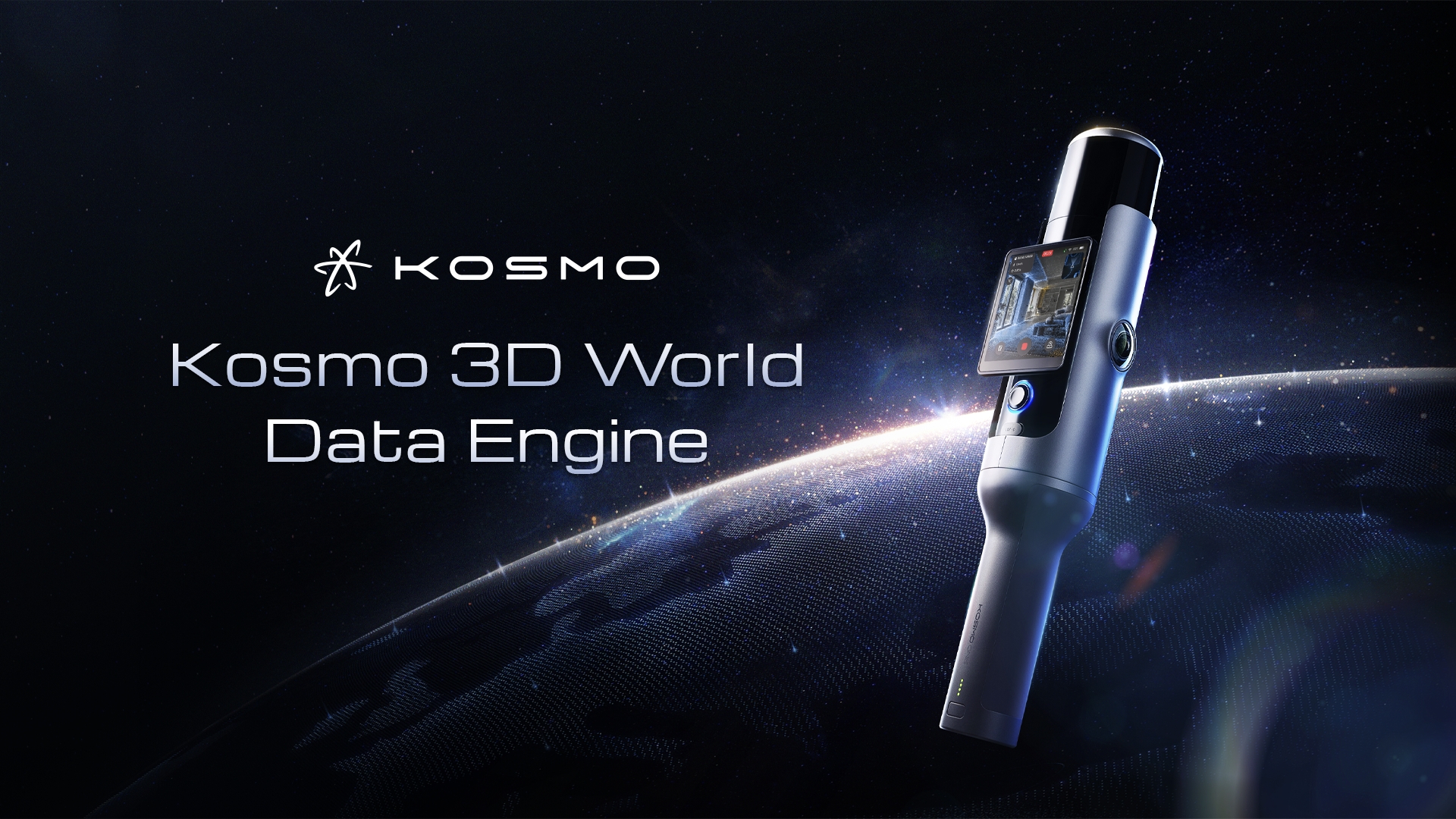
Hesai has formally launched Kosmo, combining its Kosmo One spatial camera with Kosmo World cloud software to turn physical locations into 3D assets for robotics training and world-model development. Announced on 14 October, the system combines lidar, a one-inch imaging sensor and an IMU with synchronised capture and 3D Gaussian Splatting reconstruction. Hesai says a typical 100 m² indoor space can be scanned in approximately 15 minutes, with the resulting scenes exported for simulation and model development. Kosmo One supports 8K image capture, although user-exported files are limited to 6K.
Kosmo World generates 3DGS, mesh and depth data, applies scene segmentation and can adapt reconstructed views to robot-camera characteristics. Hesai announced collaborations with embodied-AI developers Galbot and Dexmal and described a Sharpa robot demonstration in a Dairy Queen store using Kosmo-generated training scenes, reporting a 99% task success rate. Those results are from a specific company-reported setup, not a general robotics benchmark. The platform also targets media and digital-content workflows, with demonstrations involving Pixar's RenderMan and Amap.
The October unveiling is a commercial launch rather than the technology's first disclosure. In its second-quarter results, Hesai reported initial Kosmo prototype deliveries in July and orders from humanoid developers including Galbot. Separately, its robotics actuation modules, including components used in Sharpa's Wave hand, exceeded 10,000 cumulative deliveries by the end of Q2 2026. Kosmo extends Hesai's lidar and component business into capture and processing infrastructure for robot training.