
KAIST humanoid v0.9 pushes 35 kg objects and lifts 20 kg using onboard vision
DRCD Lab and RAILAB demonstrate visually guided whole-body manipulation, using reinforcement learning and human demonstrations to develop interaction skills.
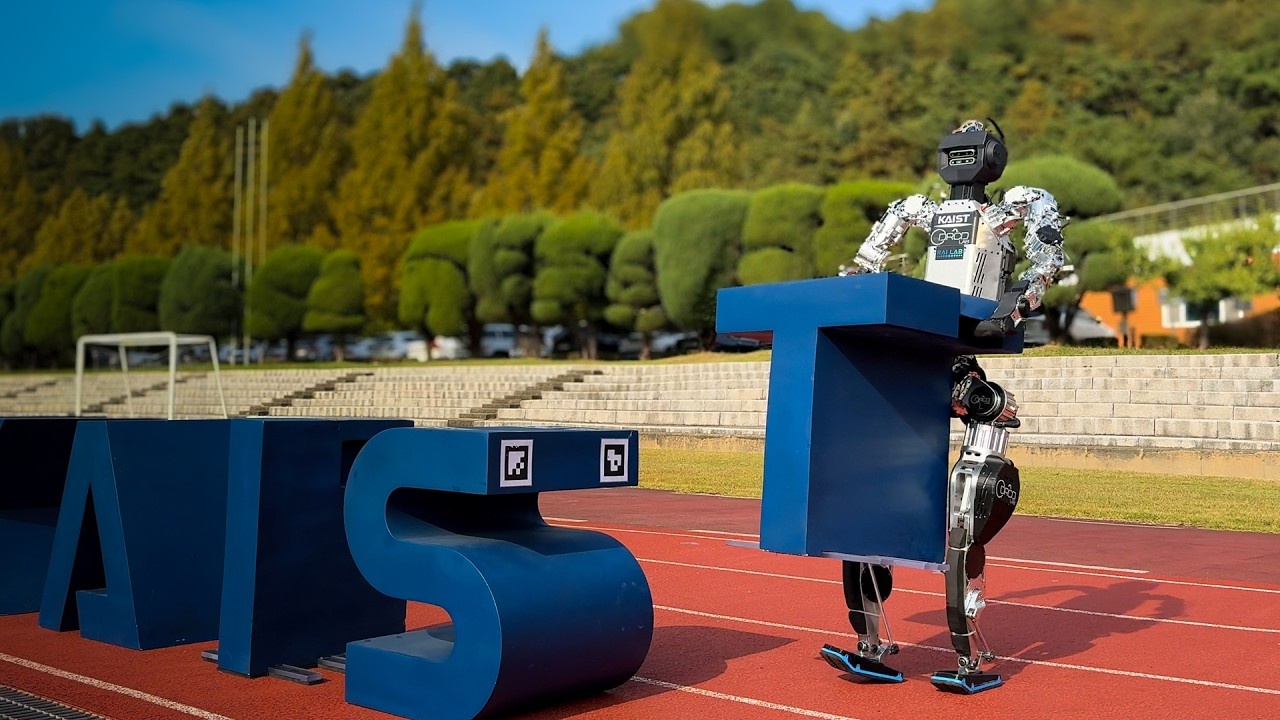
KAIST’s Dynamic Robot Control and Design Laboratory has demonstrated its Humanoid v0.9 pushing objects weighing up to 35 kg and lifting loads of up to 20 kg using onboard visual feedback. Released on 19 October, the demonstration was developed with KAIST’s RAILAB, which designed the robot’s arms. The robot moves oversized letter blocks into position to spell “KAIST.”
The footage combines walking, balance and object handling in a single sequence. The humanoid steps while carrying a large letter-shaped block in front of its body and uses its arms to move objects across the ground. Visual feedback supplies information during these interactions, connecting the robot’s body movements with the positions of the objects it is handling.
Whole-body locomanipulation coordinates arm forces with the torso and legs. Pushing transfers horizontal force through the robot’s body and changes the balance demands at its feet; lifting requires it to support the object’s weight while controlling posture. The demonstrated 35 kg pushing and 20 kg lifting tasks therefore exercise different contact and load conditions.
The lab says its interaction skills were developed through deep reinforcement learning and learning from human demonstrations. These methods provide a way to train coordinated physical behaviour across the robot’s limbs, with the resulting skills shown on the hardware in the letter-arrangement task. The release presents a research demonstration of visually guided manipulation.
The work extends DRCD’s full-size humanoid research programme, which combines dynamic locomotion with a fully custom actuator system. Its earlier v0.7 field-test video focused on locomotion and interaction. The v0.9 demonstration brings the programme’s moving platform and RAILAB’s arm development together around tasks that require sustained physical contact with external objects.