
Kepler moves K2 Bumblebee into mass production
Kepler has begun batch production of K2 Bumblebee, which combines linear and rotary actuators.
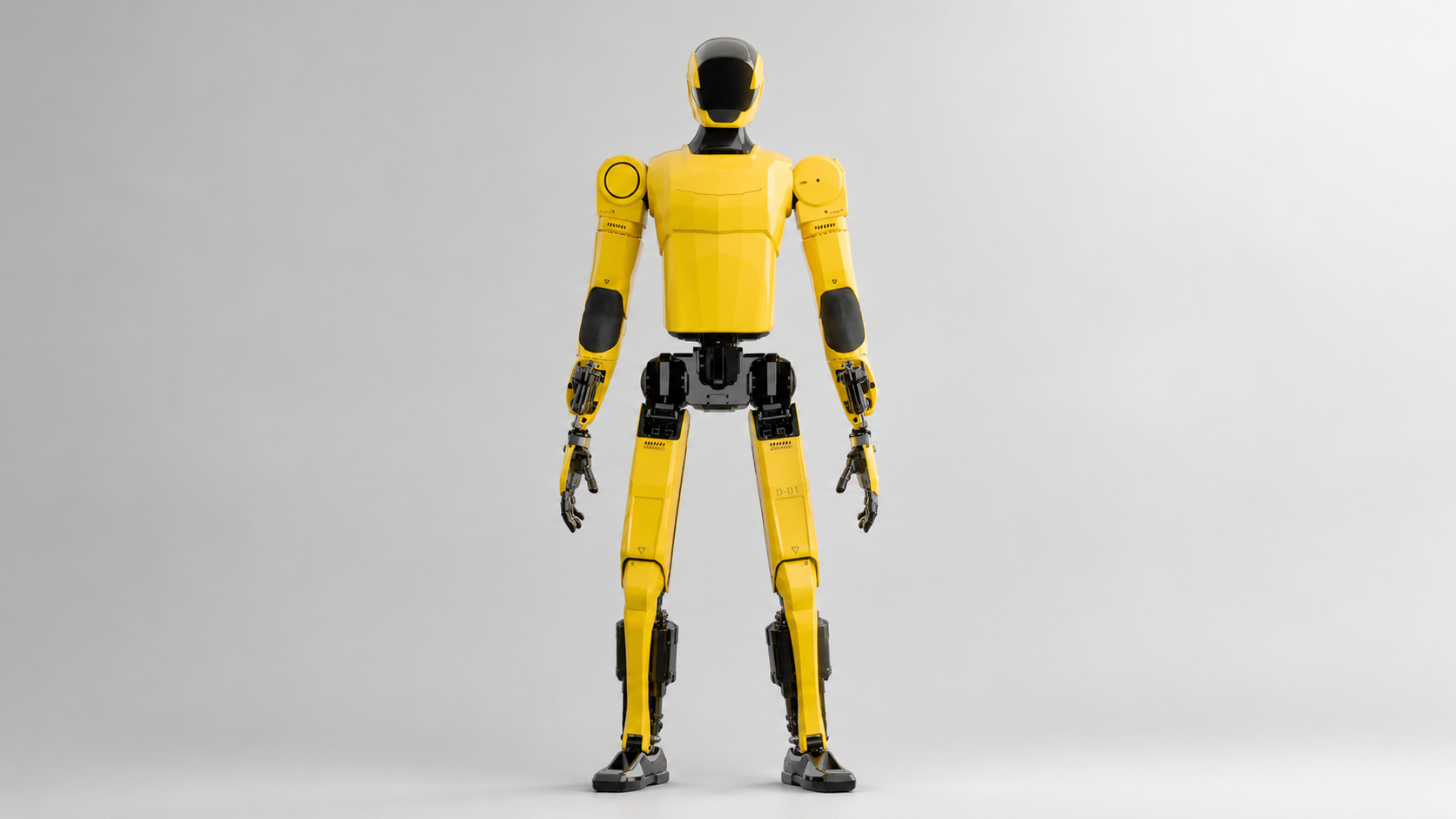
Kepler Robotics moved its K2 Bumblebee humanoid into mass production in September 2025, pricing the robot at RMB 248,000 (~$36,550 USD) The Shanghai company said the production start followed component testing, environmental testing, system aging trials, obstacle-navigation work, and long-duration uptime evaluation.
Kepler is a Shanghai humanoid robotics company founded in 2023 and led by Yang Hua, the founder of Chunmi Technology, a Xiaomi smart-home ecosystem company. The company introduced its Forerunner humanoid series at CES 2024, then moved K2 toward industrial environments through factory testing, developer tools, and production-line readiness work. Kepler's public work has leaned toward hardware engineering, component control, and industrial deployment, with K2 designed around manufacturing, logistics, inspection, and repetitive physical tasks where endurance, payload, and joint durability matter most.
K2 Bumblebee is built around a hybrid serial-parallel actuation system combining planetary roller screw linear actuators with rotary actuators. Kepler says the architecture enables a straighter-knee walking gait, higher torque density, precise joint control, and stronger durability under repeated industrial movement. At IROS 2025, the company described using roller screw linear actuators and rotary motors together, with reinforcement learning and GPU-accelerated simulation used to train locomotion before hardware transfer.
Public K2 materials and distributor coverage describe the model around full-shift operation, 52 degrees of freedom, swappable battery architecture, tactile hands, and industrial robustness, with the mass-production announcement using RMB 248,000 as the starting price.
The Industrial Path
K2 was reportedly in testing at SAIC-GM's Shanghai automotive plant in early 2025, with later references to material-bin handling and production-line work. Kepler used WAIC 2025 to show an eight-hour industrial livestream with K2 in a continuous operating context before the mass-production announcement.
A gait upgrade announced in September 2025 preceded the production move. Kepler said the upgraded K2 used a more humanlike straight-knee gait, with reinforcement learning, imitation learning, and simulation work used to improve speed, balance, and energy efficiency. The company had spent the year connecting K2's actuator architecture to walking control, industrial testing, and developer access before committing to batch production.
Developer tools
Kepler used IROS 2025 to widen K2 from a robot product into a developer platform. The company introduced developer tools covering robotic arm control interfaces, motor APIs, vision, navigation, and voice modules, and opened access to parts of its microkernel-based Nebula OS alongside simulation, digital-twin tools, modular scene building, and a Lighthouse Program for developers and industry collaborators.
Kepler provides task creation, simulation, maintenance access and deployment support for site-specific K2 workflows.
Have a robotics update Korthos should review? Send news, deployments, product releases, funding rounds, research, or media to [email protected] or reach out on X at @agkorthos.