
Lunar Outpost raises $30M Series B to scale lunar rover production
The Golden, Colorado rover company has doubled revenue for four years running and holds eight contracted lunar missions
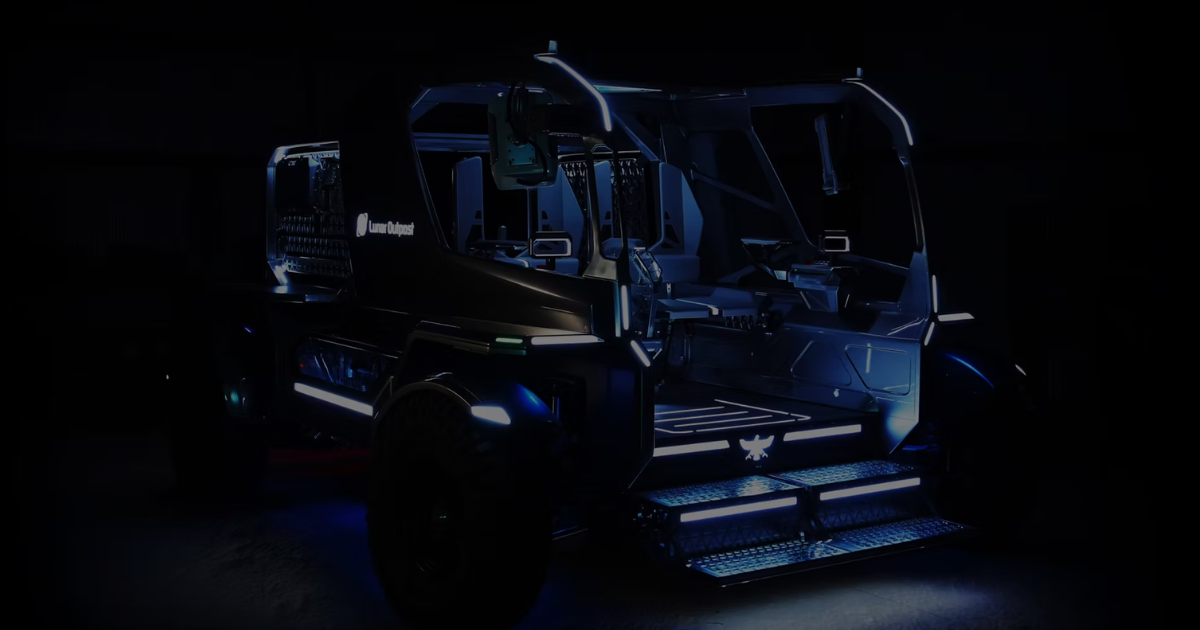
Lunar Outpost has closed a $30 million Series B led by Industrious Ventures, with participation from Type One Ventures, Eniac Ventures, Promus Ventures, and Reliable Equity. The round was oversubscribed. Capital will be used to accelerate production and deployment of the company's rover and mobility platforms and to expand its multi-year mission pipeline.
Lunar Outpost was founded by Justin Cyrus, CEO, AJ Gemer, CTO, Forrest Meyen, CSO, and Julian Cyrus, COO. Based in Golden, Colorado, the company builds mobility and autonomous systems for operations on the lunar surface and in orbit.
Lunar Outpost has doubled revenue each year for the past four years, operated the first commercial rover on the Moon, and secured eight fully contracted lunar and cislunar missions, with more rovers committed to fly to the Moon than any other commercial company. Those are the metrics that make this round different from a typical early-stage space bet.
The Products
Lunar Outpost has developed and deployed multiple generations of its Mobile Autonomous Prospecting Platform, or MAPP rover, supporting resource prospecting, infrastructure development, and sustained surface operations. It is now advancing next-generation lunar terrain vehicles as part of NASA's Lunar Terrain Vehicle Services programme for Artemis. The company's next rover classes are Pegasus and Eagle; Cyrus has described a near-term cadence of roughly one mission per year, scaling to near-monthly flights within two years, and large-scale Eagle-class deployments alongside Pegasus rovers building a Moon base at scale within five years.
Beyond surface mobility, Lunar Outpost is advancing autonomous robotics and coordination software through its STRATFI-supported MARS platform, enabling resilient multi-vehicle operations in GPS-denied environments, with applications being tested across lunar, orbital, and terrestrial settings. The company is also developing Starweave autonomous swarm software and Stargate Command and Control systems as part of its broader infrastructure stack.
The Context
In March 2026, NASA Administrator Jared Isaacman outlined a plan to commit approximately $20 billion over seven years to establish a lunar base, involving dozens of lander missions and a phased approach to rover capabilities for surface resource scouting and infrastructure construction.
Partners providing technical and commercial heritage include General Motors, Goodyear, and Leidos, bringing Apollo-era engineering experience into Lunar Outpost's current platform development.
Lunar Outpost is awaiting NASA's decision on the Lunar Terrain Vehicle Services contract supplier selection, expected around May 22, 2026. The company currently has six signed cislunar mission contracts for the next few years alongside the eight fully contracted missions already disclosed.
Have a robotics update Korthos should review? Send news, deployments, product releases, funding rounds, research, or media to [email protected] or reach out on X at @agkorthos.