
Midcentury introduces Akari learned renderer for robotics simulation
Akari turns physics-engine scene buffers into camera images, with 1,000-frame reconstruction tests and warm inference measured on an RTX 5090.
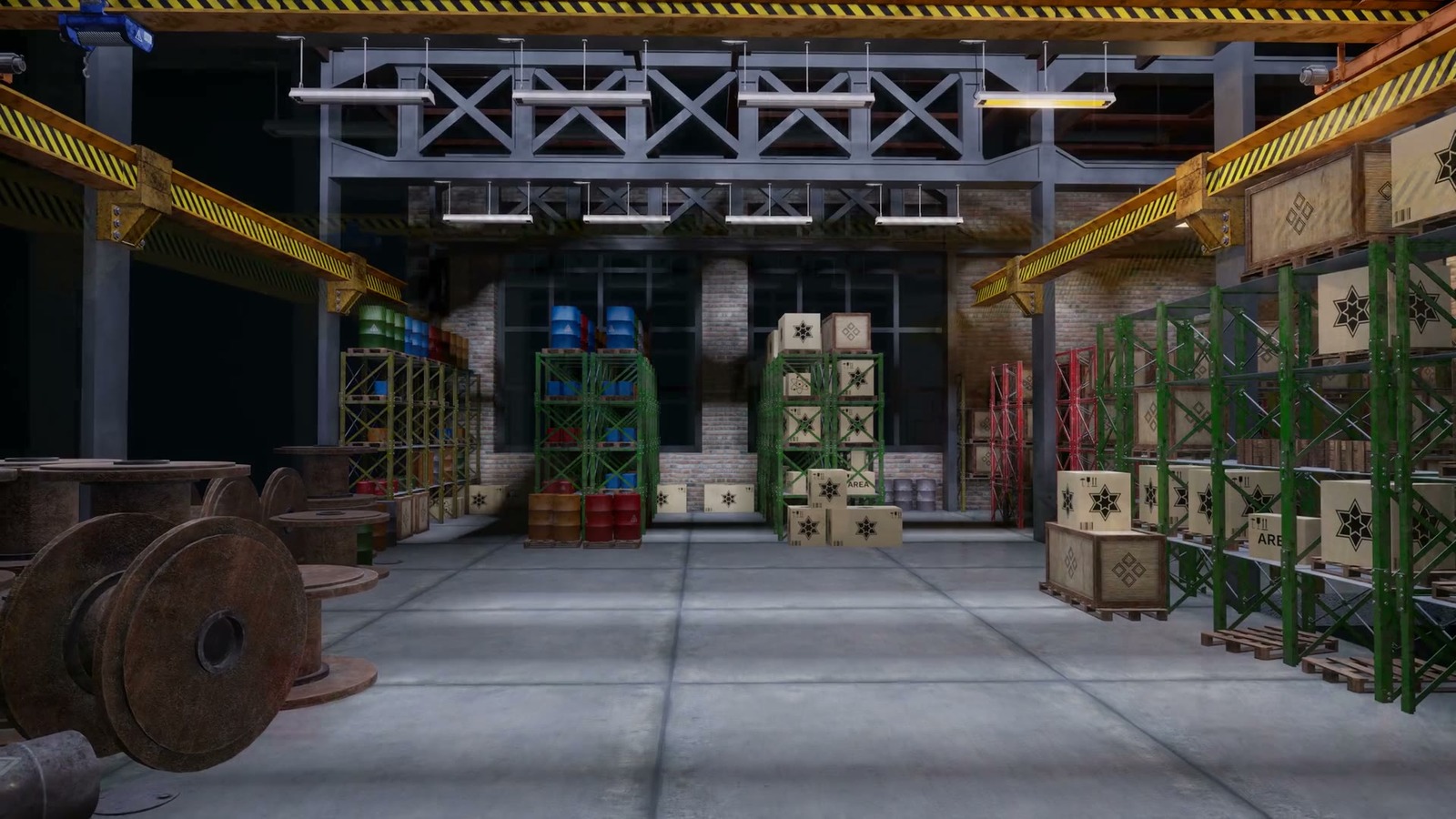
Midcentury has introduced Akari, a learned renderer that produces camera observations from the structured scene data generated by a physics simulator. The model is being developed for the company’s Matrix robotics simulation platform, where developers will be able to vary visual appearance while retaining control over objects, geometry, camera placement and physical state.
Akari takes render passes known as G-buffers, which describe visible surface colour, orientation, depth, roughness and metalness. It also receives the preceding image as context. After an initial reference image, each generated frame becomes input to the next step, alongside fresh scene buffers. Training pairs generated histories with reference targets so the model learns to work with imperfect earlier images.
That arrangement separates the simulator’s task state from the appearance of its camera observations. It could let a robotics team keep an object and grasping task fixed while changing illumination, surface finish or camera characteristics. A policy could then be evaluated across those visual conditions using the same underlying physical scene.
Midcentury reports mean LPIPS perceptual-error scores of 0.046 and 0.052 for two warehouse camera sequences, each spanning 1,000 frames, against Unreal Engine reference renders. LPIPS compares learned visual features, with lower values indicating closer reconstruction. The company reports that visual error increased more over the second camera sequence.
Warm inference averaged 0.46–0.47 seconds per frame across kitchen and warehouse environments on a single NVIDIA RTX 5090 with four denoising steps. Each timing averages 20 generation calls after five warm-up calls, with inputs and model weights loaded and GPU execution synchronised. Scene capture, G-buffer preparation, model loading and file output sit outside that measurement.
Temporal variation remains a development issue. In sampled adjacent-frame pairs from one warehouse camera, Akari’s images showed 7.5 times the average pixel variation of the engine reference. The comparison uses an uncompensated pixel-difference measure, so camera motion and other image changes contribute alongside instability. Midcentury also identifies softened detail and poorly resolved small markings as areas requiring improvement.
The reported tests use Unreal Engine images as ground truth. Midcentury plans real-image supervision and robot-policy evaluation, together with a matched path-tracing comparison and a complete rollout-cost benchmark. Akari is proprietary and planned for release through Matrix, with access currently offered through a waitlist.