
NEURA Robotics introduces Neuron AI foundation model for five robot embodiments
Neuron AI combines vision, touch, audio, robot-state data and memory, with task-specific fine-tuning through Neuraverse and a planned 4NE1 demonstration.
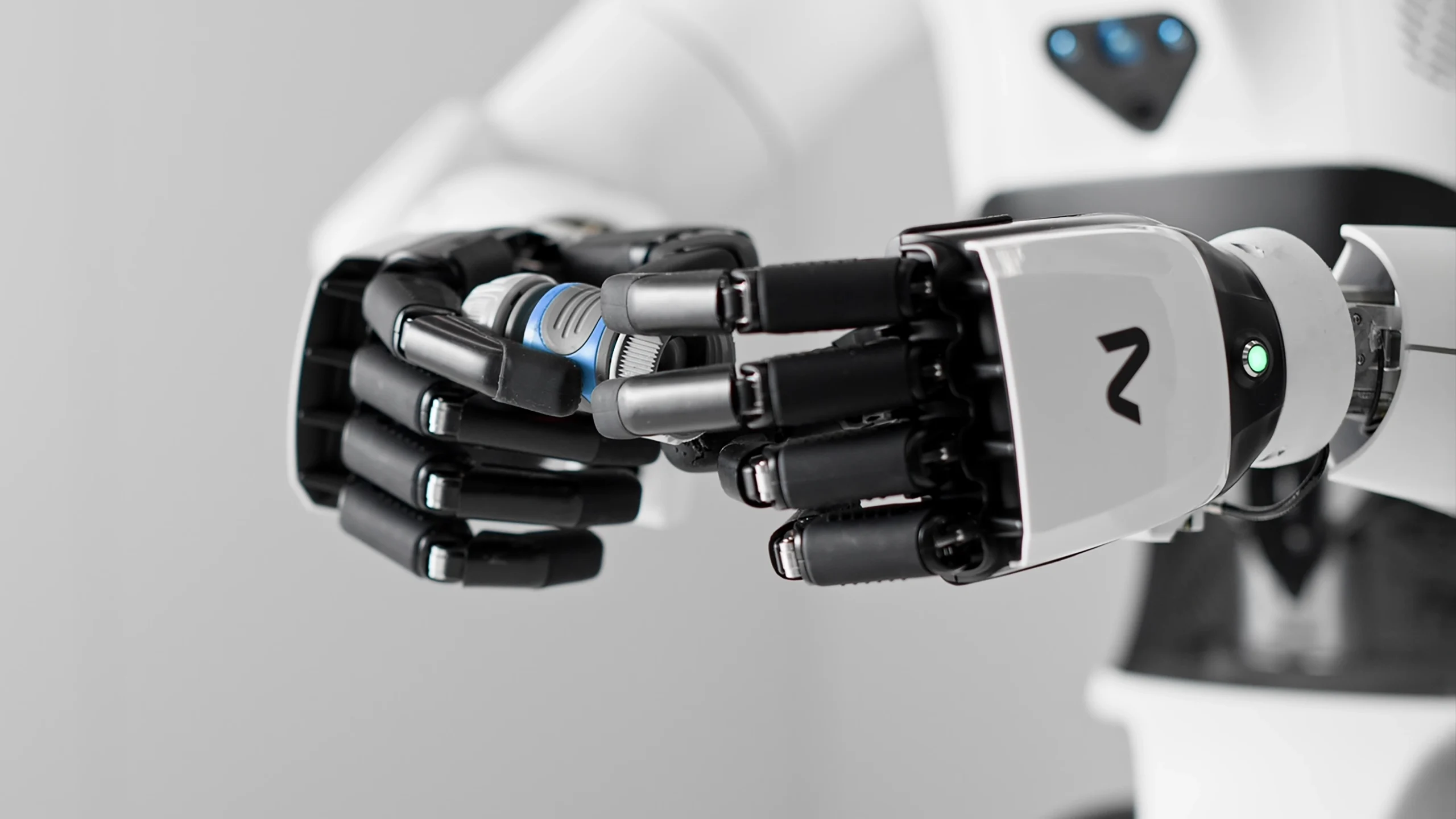
Metzingen-based NEURA Robotics introduced Neuron AI on 14 October, a Perception-Language-Action (PLA) foundation model that combines 3D vision, touch and force, audio, robot-state data and language with memory for physical manipulation. Unlike a vision-only policy, it is designed to retain object and task context when objects leave camera view and use contact or sound to assess an action's outcome. NEURA says the architecture works across five of its robot embodiments with different hands and grippers; independent cross-robot benchmark results were not disclosed.
Training combines synchronized real-world data collected in NEURA Gyms, simulation-generated task variations and sensor-equipped human demonstrations. Customers are intended to adapt the model to their processes and distribute resulting skills through Neuraverse, the company's robot-training and fleet software ecosystem. At NVIDIA GTC Berlin on 20–22 October, NEURA plans to show 4NE1 performing an eleven-minute autonomous laundry sequence, moving items through a washer and dryer. The sequence was announced ahead of the event and should not yet be treated as an independently verified result.
The model follows NEURA's April collaboration with AWS to host Neuraverse and connect NEURA Gym training to SageMaker, alongside its Dassault Systèmes virtual-twin partnership. Industrial data relationships with Schaeffler and Bosch form additional context, but NEURA has not disclosed how much data from each is used to train Neuron AI or quantified commercial deployment of the new model.