
Ornithopters move back into focus
Ornadyne and EagleSight Dynamics are developing bird-like flapping-wing aircraft for commercial applications.
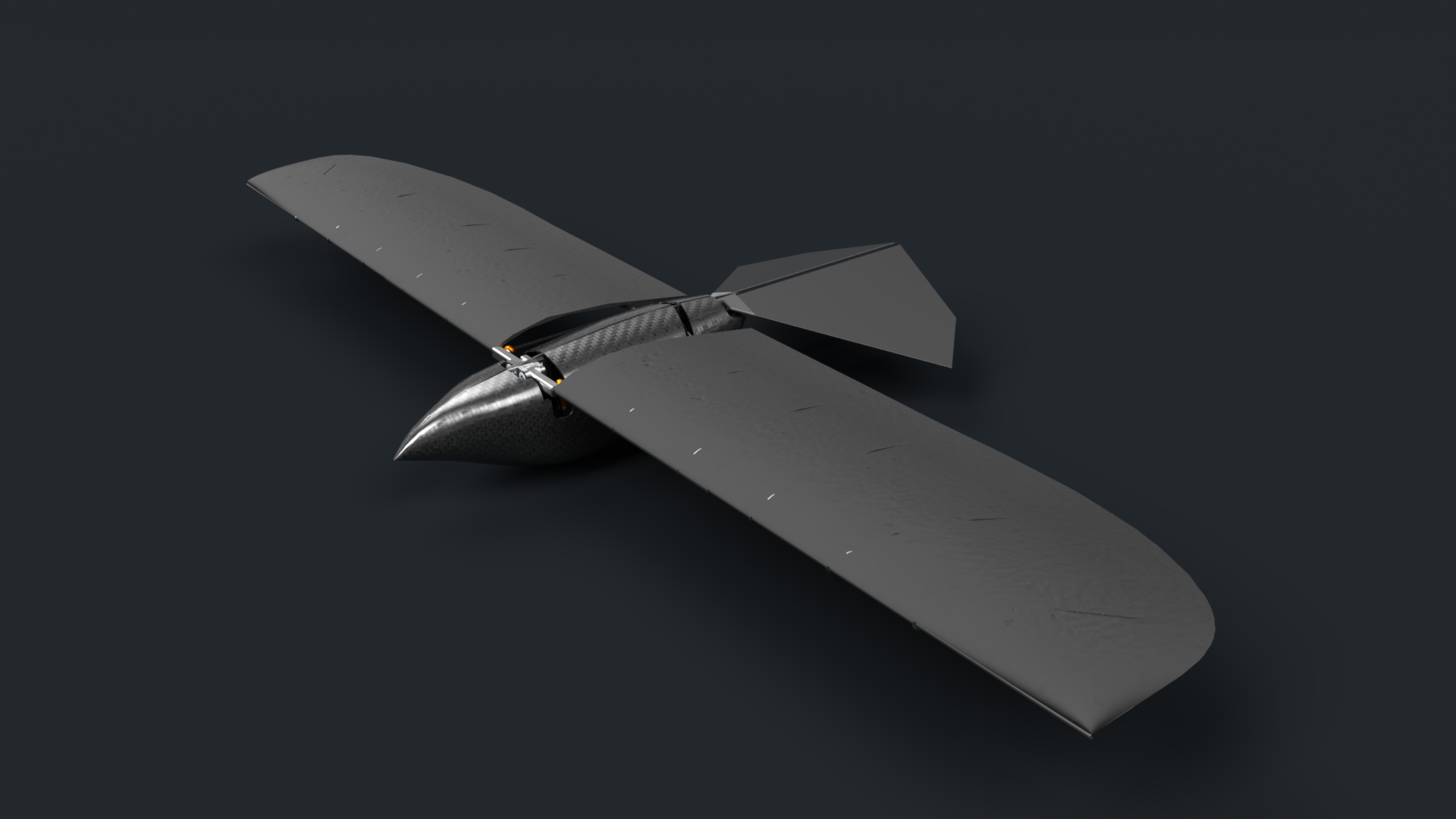
Ornadyne and EagleSight Dynamics are developing flapping-wing aircraft for missions where sound, shape and classification matter. Their work uses improvements in batteries, lightweight materials, onboard compute and flight control.

The New Companies
Ornadyne is the current U.S. anchor because it is building the category around a specific mission set which is low-signature reconnaissance.
The Los Angeles company came through Y Combinator’s P26 batch with two founders and a defence-oriented pitch for autonomous bird-like drones. Its own framing is direct, traditional drones are easy to detect because propellers are loud and the aircraft do not visually blend in. Ornadyne is building autonomous ornithopters with hour-class flight times, low acoustic signatures and natural bird-like flight, aimed at missions where a conventional UAV would be noticed too quickly.
Co-founder and CEO Geourg Kivijian designed, built and tested flapping-wing drones for more than two years through his master’s thesis, with award-winning AIAA and IEEE publications. He previously worked on Mars Sample Return coordination systems at NASA’s Jet Propulsion Laboratory and on lunar rovers at Astrolab. Co-founder and CTO Armen Arakelyan previously engineered Starship components at SpaceX and led machining at USC Rocket Propulsion Laboratory, where the team set the amateur rocketry altitude record at 144 km.

EagleSight Dynamics is a Shenzhen-based company also known as 鹰瞰智翼. The company completed a Pre-A round in May 2026, reported as tens of millions of yuan, with Oriza Seed as investor. The company is focused on embodied-intelligence bionic flapping-wing robots, with the new funding directed toward core technology research, iteration of its fluid simulation engine, consumer and industrial product development, and commercial rollout.
The company’s current work includes Dante, a consumer-grade flapping-wing drone prototype, and Vortrix, a fluid-control simulation and training engine for flapping-wing robot control. It is reported Dante has completed a functional prototype, accumulated more than 3,000 hours of flight time and is expected to launch on Kickstarter in the second quarter of 2026. They also have a second embodied flapping-wing robot planned for first flight in June, with productization targeted for the first quarter of 2027.

The Precedents
AeroVironment's Nano Hummingbird, developed under a DARPA contract and announced in 2011, demonstrated untethered bird-scale flapping flight with onboard video. It remained a prototype.

Animal Dynamics’ Skeeter, a dragonfly-inspired micro-UAS developed for short-range reconnaissance and urban environments, reached a described weight of 50 grams with four flapping wings, quiet operation, gliding capability, and turbulence handling. It has not entered mass production.

The consumer side developed its own line. Bionic Bird sells biomimetic RC drones and smartphone-controlled ornithopters inspired by birds and insects, including MetaFly and The Swift. The company positions its products as propeller-free flying machines that draw on natural flight rather than conventional drone geometry.

Northwestern Polytechnical University’s Xinge, or Homing Pigeon, set a long-duration ornithopter record in 2023, with Chinese state media reporting a continuous flight time of three hours, five minutes and 30 seconds on one charge. Source

Why It Keeps Returning
Rotorcraft are mechanically direct and commercially proven, but they make a recognisable sound and move in recognisable ways. Fixed-wing UAVs are efficient at range, but remain visually legible as aircraft. An ornithopter sacrifices some of that conventional simplicity for a more ambiguous profile.
Ornadyne targets defence reconnaissance, where acoustic and visual signatures affect detection. EagleSight initially targets consumer and research users, with industrial and low-altitude applications also planned.
Where It Could Matter
Defence reconnaissance is the obvious one: low-altitude observation, route scouting, perimeter checks and short-range surveillance where a conventional UAV would be noticed quickly.
Industrial use cases are more selective, but could include wildlife-sensitive monitoring, infrastructure inspection, security patrols and low-altitude observation near people. Consumer products sit in a different lane, where natural motion, novelty and interaction can create demand while the company learns control, durability and manufacturing.
Flapping-wing systems must manage control authority, payload, endurance, wind tolerance, manufacturing repeatability and real-world robustness. Those constraints have limited the category for decades, even as individual prototypes have been impressive.
Have a robotics update Korthos should review? Send news, deployments, product releases, funding rounds, research, or media to [email protected] or reach out on X at @agkorthos.