
sewts is turning towel-feeding robots into a laundry automation layer
A 700-textile-per-hour VELUM cell, one-day setup claim, and 7 million euro Series A target one of the remaining manual steps inside industrial laundries.
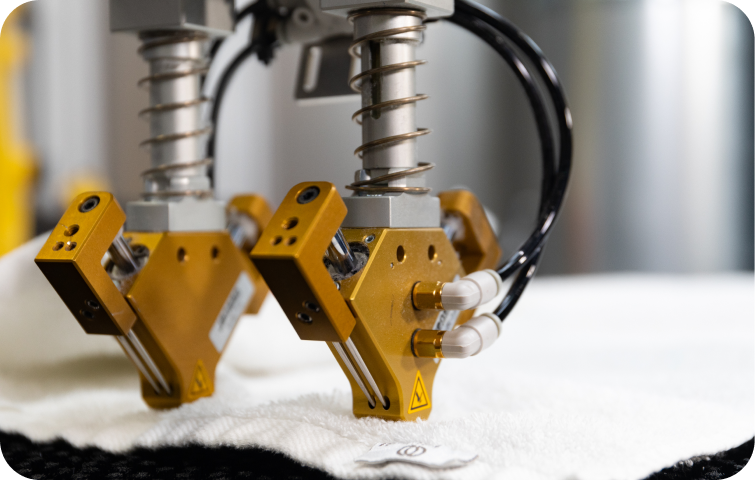
The task is narrower than general textile automation and harder than it looks. A towel has to be picked, spread, oriented, and fed without wrinkles into a folding machine. Industrial laundries often automate washing, drying, and folding mechanics, while people still stand at feeding stations. sewts says 30% of personnel costs can come from equipping folding machines, which gives VELUM a clear labor-cost surface.
The product page states that VELUM can outperform manual labor after 1.5 to 2.5 years depending on workload. Public customer logos include Stangelmayer, Aschenbrenner, Korian, and Greif. Those references show laundry-market exposure, though they do not disclose installed unit counts, utilization, or payback by customer.
The competitive field includes manual laundry feeding, Jensen and Kannegiesser laundry automation systems, textile handling robotics research, SoftWear Automation-style fabric manipulation, and custom integrators building feeding cells. sewts' distinction is a focused deformable-material system for towel feeding, not a general sewing or garment robot.
Public material does not show installed unit count, uptime by laundry, textile error rate by item type, maintenance burden, customer-level payback, pricing, contract retention, or the sensing method VELUM uses to identify grasp points. The strategic test is whether sewts can turn deformable-material handling into a repeatable laundry product. If VELUM keeps feeding towels through full shifts with low operator attention, sewts becomes a labor automation layer for industrial laundries rather than a textile robotics research story.
Have a robotics update Korthos should review? Send news, deployments, product releases, funding rounds, research, or media to tips@korthosrobotics.com or reach out on X at @agkorthos.