
Skild AI Says It Has Passed $100M ARR as Robot Intelligence Moves Into Commercial Test
Skild says it reached $100 million in annual recurring revenue 10 months after its first commercial deployment, with more than 60 paying customers as S1 adds a new model capability.
Skild AI says it has crossed $100 million in annual recurring revenue around 10 months after its first commercial deployment, with more than 60 paying customers.
Skild develops robot-control models for different hardware platforms. The revenue figure is company-reported.
Skild previously said live revenue grew from zero to about $30 million in a few months during 2025. It described deployments across security, construction, delivery, data centres, warehouses and factory assembly in its January Series C announcement, when it raised $1.4 billion at a valuation above $14 billion. Skild’s model sits above the robot itself: the company supplies intelligence intended to run across machines built by others, while real-world deployments feed experience back into the model-development loop.
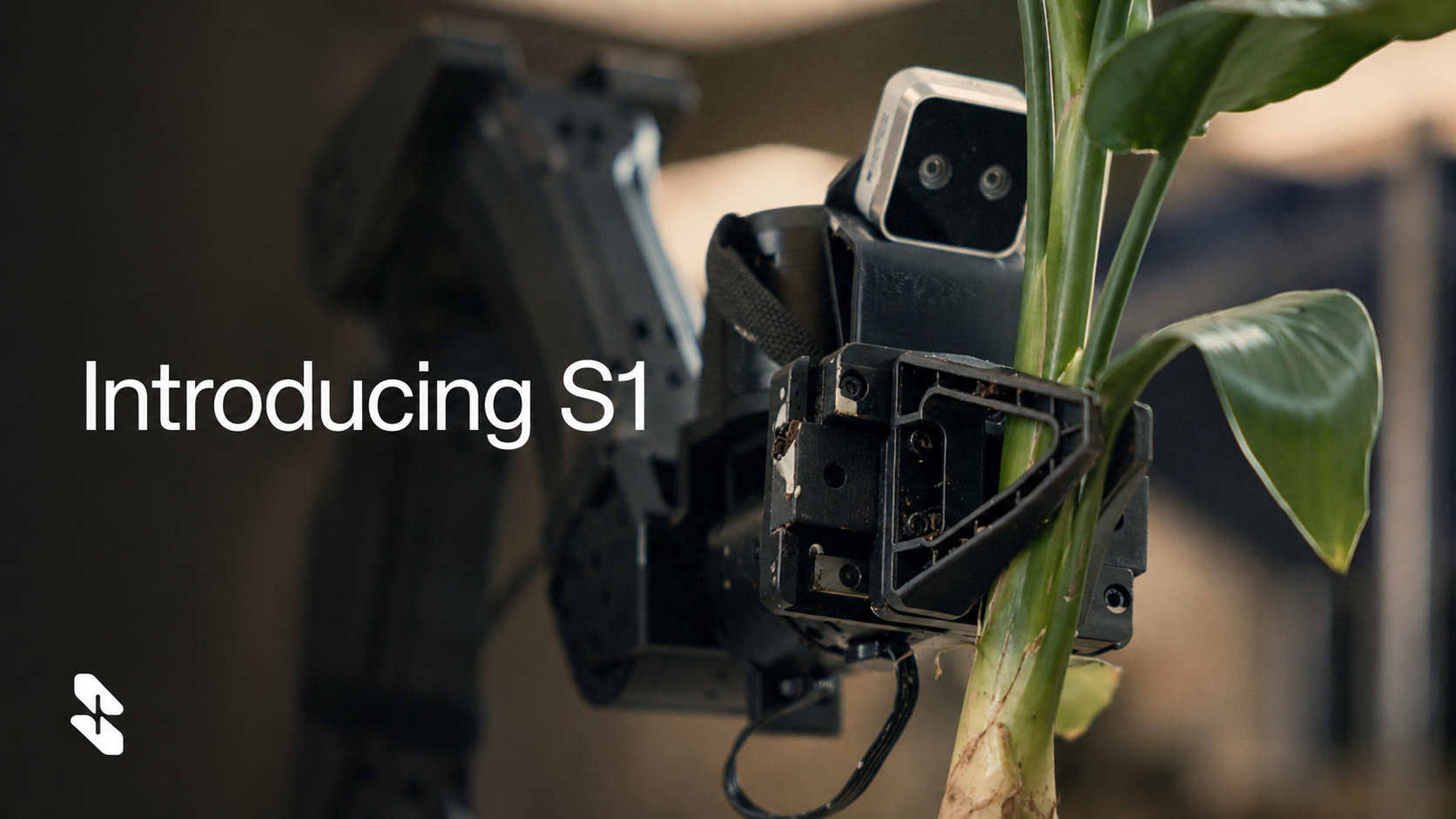
The $100 million claim arrives only weeks after Skild released S1, its latest robotics foundation model. S1 uses in-context learning: a video demonstration acts as the task specification, allowing the model to translate what it sees into robot actions without task-specific fine-tuning. Skild has shown S1 handling previously unseen manipulation tasks lasting up to 10 minutes, including plant potting, coffee preparation, kit assembly and pancake flipping. The company says S1 is already being deployed with commercial partners.
The timing connects the revenue claim to a model designed to shorten the path from a new task to a working robot policy. If that loop holds in industrial settings, each deployment can add operating experience to a system intended to generalise across hardware.
FieldAI said in June it had passed $100 million across revenue and customer contracts from more than 30 customers in construction, data centres, mines and other unstructured environments. That combined total is not directly comparable with Skild’s annual recurring revenue.
Dyna Robotics said in August that its robots had crossed the return-on-investment threshold, with Din Tai Fung rolling them out across its US restaurant network. Dyna said deployments across restaurants, hotels, logistics and data centres could bring its fleet to hundreds by the first half of 2027.
These figures measure different things and are largely company-reported. Revenue, customer counts, return on investment and deployment measures should be compared separately.
Have a robotics update Korthos should review? Send news, deployments, product releases, funding rounds, research, or media to [email protected] or reach out on X at @agkorthos.