
Ultra raises $50M Series A to scale warehouse robots running Physical Intelligence models
Framework Ventures leads the round as Ultra expands its OP1 warehouse fleet, combining its hardware and operations with Physical Intelligence’s robot models.
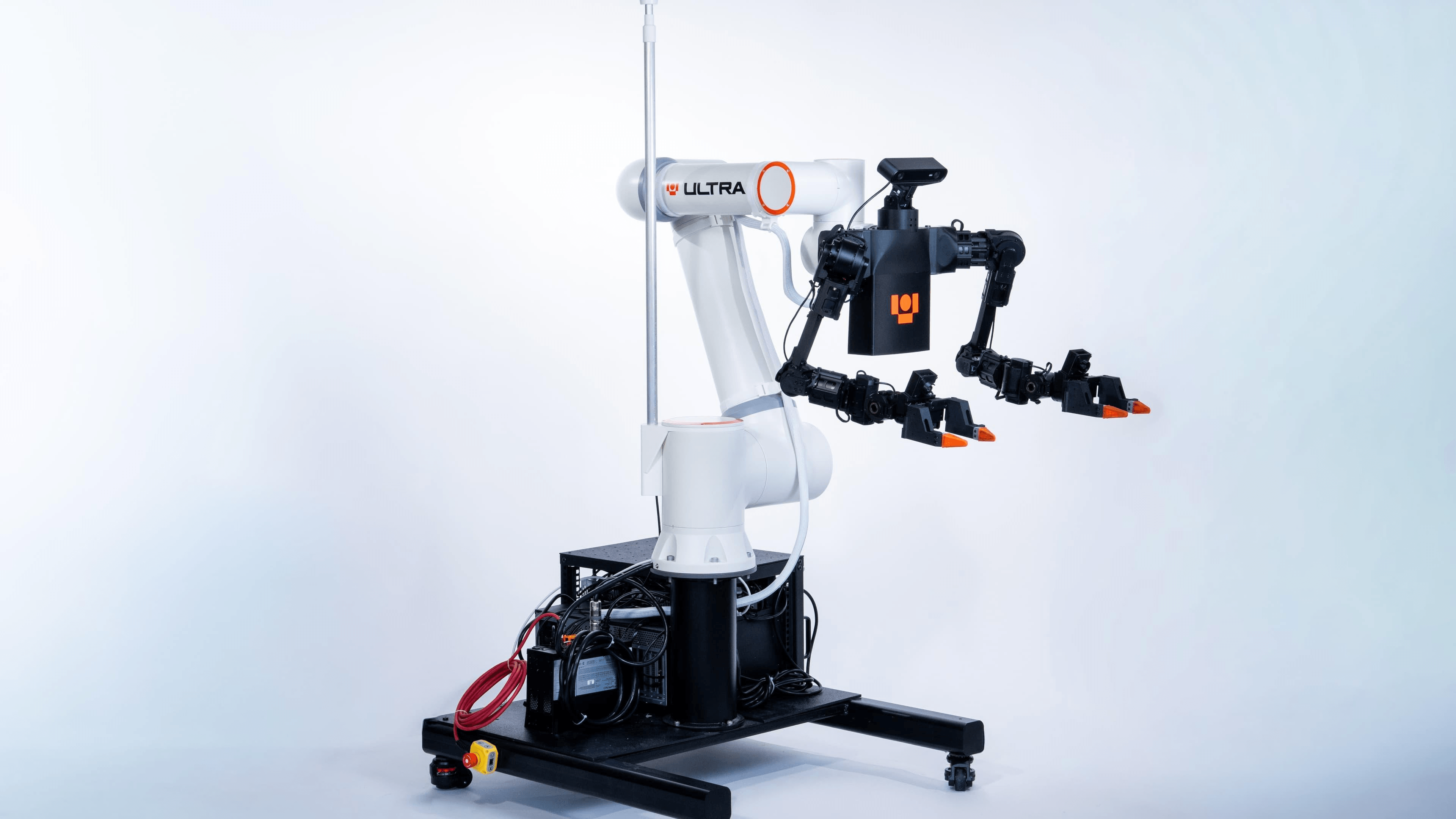
Brooklyn-based warehouse robotics company Ultra has raised a $50 million Series A led by Framework Ventures, with participation from Y Combinator, taking announced funding to $62 million. The financing follows a $12 million seed round led by Y Combinator and NextView and will support expansion of Ultra’s Robots-as-a-Service fleet. The company says its robots have already packed more than 500,000 customer orders across U.S. warehouses.
Ultra builds Operator, or OP1, a stationary multi-arm robot for warehouse packing, sorting and kitting. The system can be rolled into an existing workstation, connected to standard power and integrated within hours. Ultra lists a 5 × 5 ft footprint, up to 10 ft of vertical reach and a payload of up to 10 lb per arm. Its stationary design supports extended shifts without battery charging or autonomous navigation.
Customers pay an initial integration fee followed by recurring hardware and software charges. CEO Jon Miller Schwartz told Fortune that Ultra has booked significant revenue, without disclosing an amount, and that customer demand has allowed it to increase pricing.
Physical Intelligence’s vision-language-action models run on Ultra hardware in live customer warehouses. Ultra supplies the hardware, integration and operations, while Physical Intelligence provides general-purpose robot models. Ultra says successive generations from π0 through π0.5 and π0.6 have improved success rates, throughput and reliability in production packing tasks.
Physical Intelligence published a full warehouse shift with π0.6 at 96.4% autonomy in February, packing real customer orders. Ultra retains human-in-the-loop support for failures and edge cases. When a model cannot complete a task, a human operator intervenes to finish it correctly, generating additional training data for subsequent model iterations. The reported autonomy figure describes that recorded shift, rather than a fleet-wide operating rate.
Ultra says adding its deployment data to Physical Intelligence’s pre-training further improved packing throughput, while π0.6 increased success rates compared with π0.5. The company also reported stronger prompt adherence and more effective recovery strategies for unusual cases, helping it accommodate variations in customer workflows.
Ultra’s current focus is e-commerce fulfilment, where variable products, deformable packaging and changing workflows complicate automation. Its robots operate in warehouses across the U.S.; in its deployment account published by Physical Intelligence, Ultra said it was scaling toward hundreds of deployments. The Series A provides additional capital for fleet expansion.