
Leju and Zhaofeng report 15 Kuavo humanoids in regular automotive-parts loading
A named automotive-parts deployment combines repeated loading work with parallel robot training-data collection.
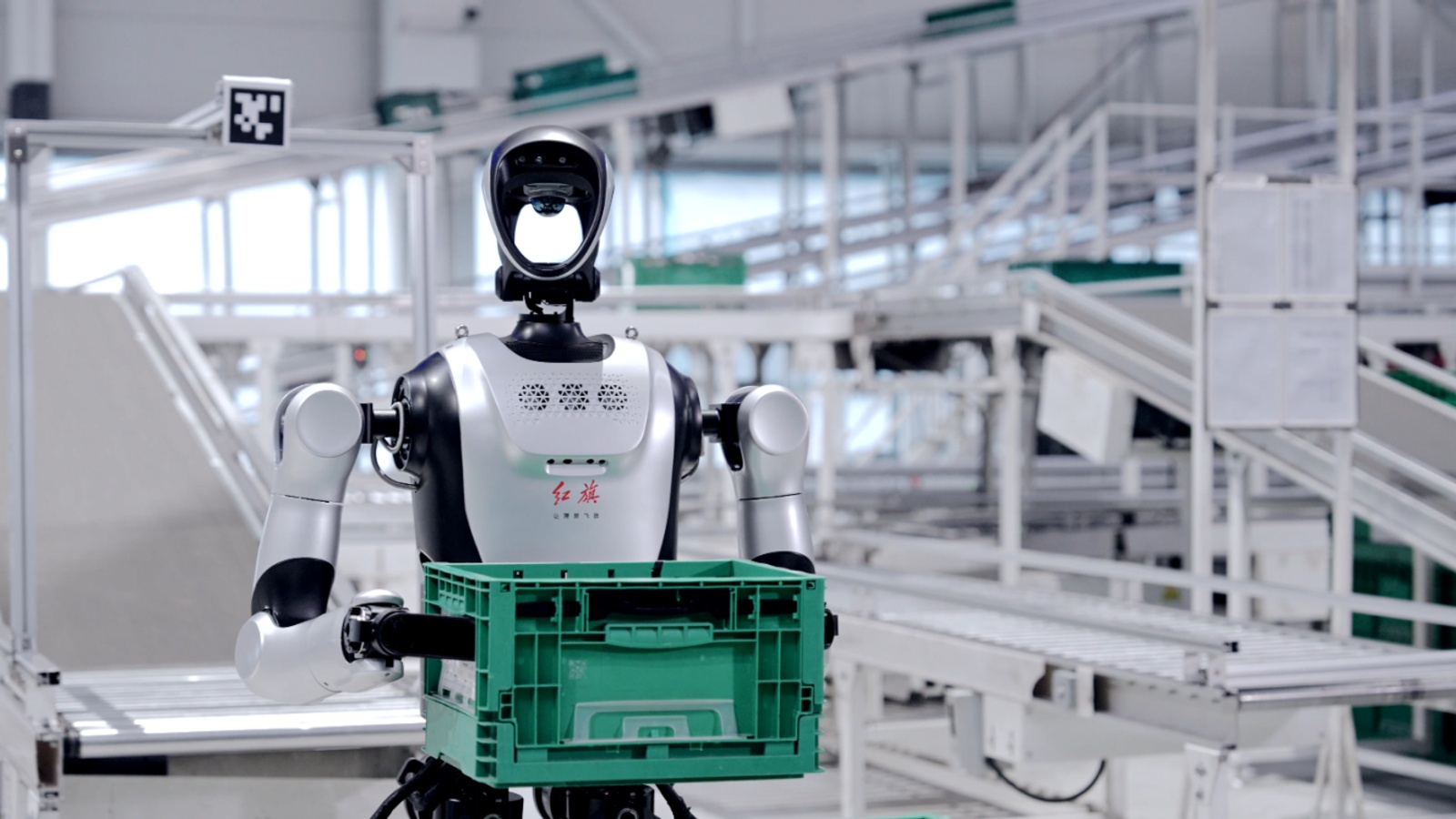
Leju Robotics and Zhejiang Zhaofeng Mechanical and Electronic announced regular automotive-component loading by 15 Kuavo humanoids on 15 October 2026. The installation at Zhaofeng’s No. 3 factory in Hangzhou Xiaoshan handles bearing-related parts with internal diameters of roughly 80–120 mm through picking, turning, transport and placement sequences.
The companies report a 98% loading success rate and cycles below 40 seconds. A Securities Times reporter observed the workflow on site and reported approximately 15 seconds for a worker performing the corresponding operation. Zhaofeng said the robots could serve 15 workstations and more than ten component types, with approximately 1,000 cumulative operating hours and over 60,000 components assisted after more than two months of operation. Those hours and production figures describe the project collectively.
The deployment follows the companies’ October 2025 partnership and joint venture for robot training and industrial operations. Leju’s development system divides loading into more than 30 reusable skill modules and distributes trained skills across multiple machines. Monitoring covers dropped parts, collisions and excessive speed, while operational data feeds back into model development.
The companies estimate that parallel operation could collect more than 40,000 training records per month and plan to contribute an automotive loading dataset to the Open Atom Foundation’s OpenLET initiative. The monthly figure describes an estimated collection rate. The disclosed workflow supports this particular set of parts and factory tasks; it does not establish unattended operation throughout the plant.