
Perceptyne is turning semi-humanoid workcells into a factory automation layer
The Hyderabad startup is building dual-arm industrial robots for assembly, packaging and other dexterous factory work.
Perceptyne was founded in 2021 by Raviteja Chivukula, Jagga Raju Nadimpalli, and Mrutyunjaya Nadiminti, with the founding team identified as IIT Madras and BITS alumni.
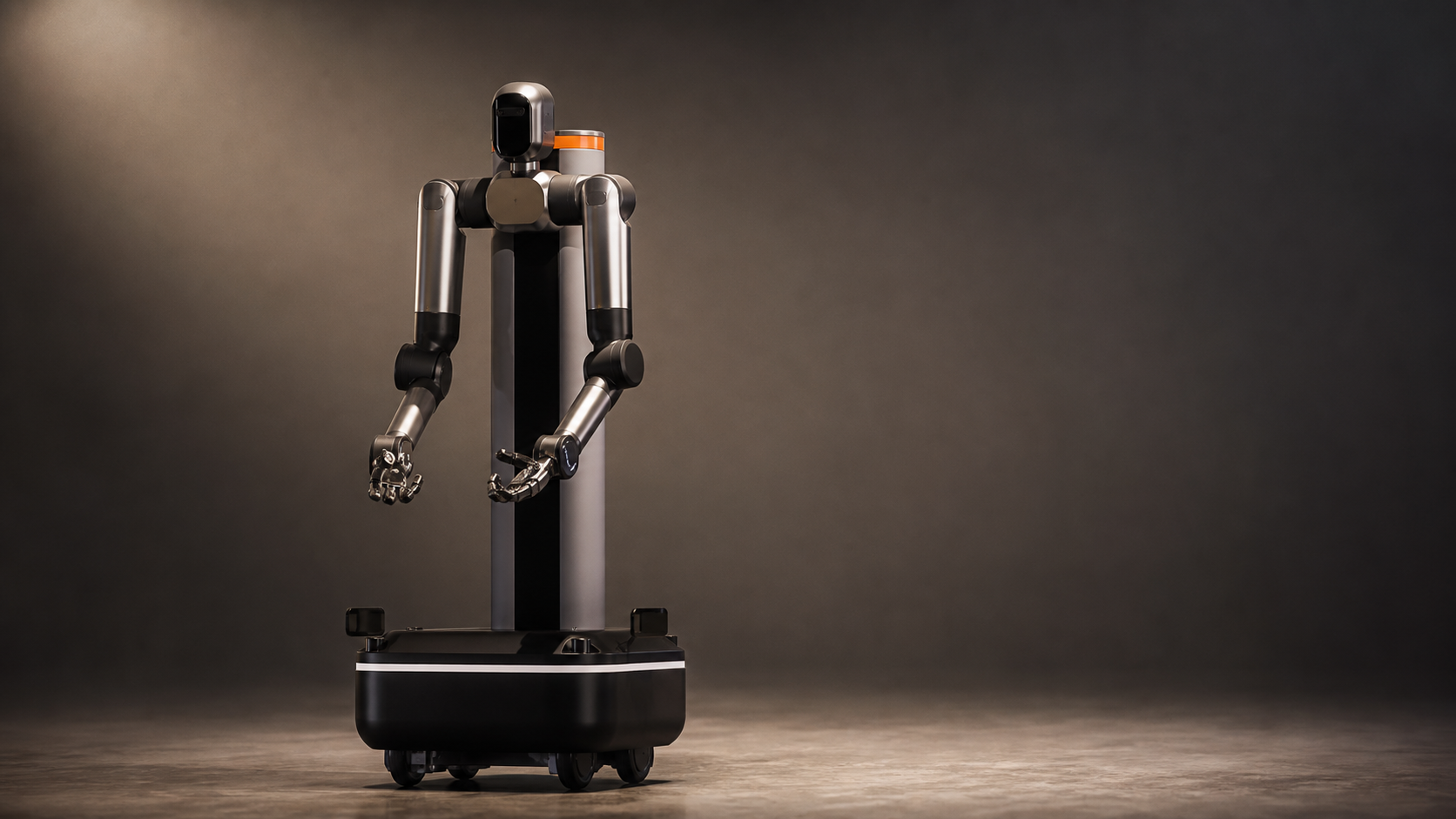
PR-OMNI uses dual seven-degree-of-freedom arms, tactile sensing and a 10-kilogram combined payload for picking, placing, bolting and related workcell tasks. Its mobile base and upright body provide access to fixtures and tools arranged for people.
Perceptyne also presents simulation as part of the sales process, including facility testing through NVIDIA Isaac. The integration promise is aggressive: the company says it can reduce deployment timelines from months to days and avoid major production downtime. For manufacturers, that claim only becomes valuable if simulation actually lowers commissioning time in live plants, where part variation, bad lighting, fixture wear, and maintenance handoffs expose weak systems quickly.
Have a robotics update Korthos should review? Send news, deployments, product releases, funding rounds, research, or media to [email protected] or reach out on X at @agkorthos.