
Seasats is turning autonomous surface vessels into a naval data infrastructure layer
A $20 million Series A, a $24 million APFIT award and a $100 million-plus contract base support a distributed hull strategy for persistent ocean scouting.
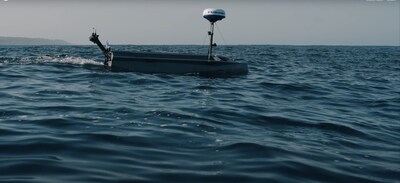
Lightfish is a 305-pound autonomous surface vessel with up to six months of endurance, 66 pounds of payload capacity, solar-electric power with hybrid reserve, HD cameras, Iridium and Starlink communications, and onboard AI for edge processing and target classification. Seasats has disclosed operations with U.S. Navy Task Force 59 in the Middle East, Task Force 66 in Europe, scientific research missions off Australia, and maritime security patrols in Argentina. Source
Quickfish adds a faster interceptor layer above Lightfish, while Heavyfish is the largest planned hull in the same staircase. Quickfish completed an eight-day continuous sea trial in March 2026, with a 450-pound payload, 35-plus-knot speed, and an integrated UAV payload bay. Heavyfish is listed with a 2026 splash date, 9,000-pound weight, 1,000-pound payload capacity, and 12-knot top speed.
Have a robotics update Korthos should review? Send news, deployments, product releases, funding rounds, research, or media to [email protected] or reach out on X at @agkorthos.