
Sereact links Zalando returns robots to simulation and cloud retraining
Sereact, NVIDIA and Nebius connect returns-line data with simulation, model training and evaluation for robots operated by CEVA Logistics.
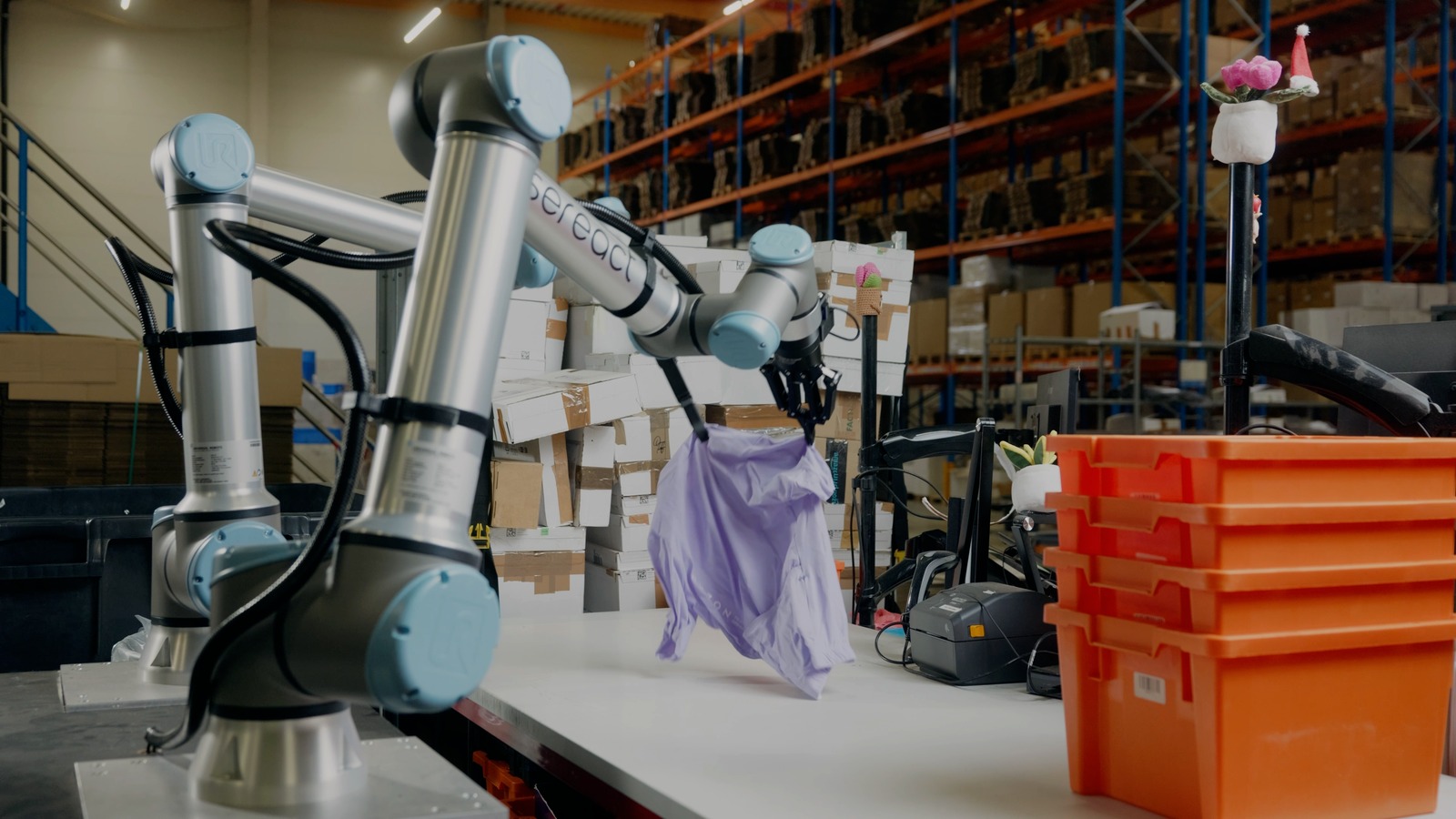
Sereact, NVIDIA, Nebius, CEVA Logistics and Zalando have introduced a training workflow for robotic returns handling that carries operating data through simulation, model updates and testing. Sereact’s Cortex-controlled robots provide recordings from Zalando returns stations run by CEVA; Nebius supplies the cloud infrastructure, and NVIDIA provides simulation and world-model tools.
The workflow starts with video and robot kinematics recorded during handling. These episodes are stored on Nebius and expanded into simulated variations using Isaac Lab, with Cosmos generating visual changes in garments, packaging, materials and lighting. A versioned dataset then supports Cortex post-training on NVIDIA Blackwell GPUs. The variations let developers revisit difficult handling situations without recreating every combination at the physical station.
An updated policy is evaluated on held-out variants against a threshold set by Sereact. Passing policies proceed to tests on the operating robots. When a policy fails, the workflow generates additional examples of the missed cases and repeats training. Sereact says this process can return a tested update within days, shortening a development cycle that previously took weeks.
A coding agent coordinates the stages using NVIDIA’s Physical AI Data Factory skills and Nebius Workbench instructions. It estimates computing costs, starts jobs and checks evaluation results. Engineers set the development goal and approve runs above a specified cost limit. Workbench provides the shared storage, command-line tools, software interfaces and data formats connecting those stages.
The partners announced live returns operations on 7 October at CEVA sites in Greven, Germany, and Świebodzin, Poland. Their dual-arm stations handle returned fashion items through a Robotics-as-a-Service arrangement. Loose clothing, changing packaging and inconsistent item presentation give the training system a varied stream of handling examples from those operations.
Nebius is making the workflow available as a Physical AI Workbench reference architecture in its EU cloud regions, with NVIDIA’s Data Factory skills preinstalled. Robotics developers pay for the computing and storage used. Sereact’s returns application supplies the initial operating case for that architecture.