
Stanford ToddlerBot turns low-cost humanoid hardware into a learning platform
The open-source platform is built for policy learning, teleoperation and loco-manipulation with a compact body under $6,000.
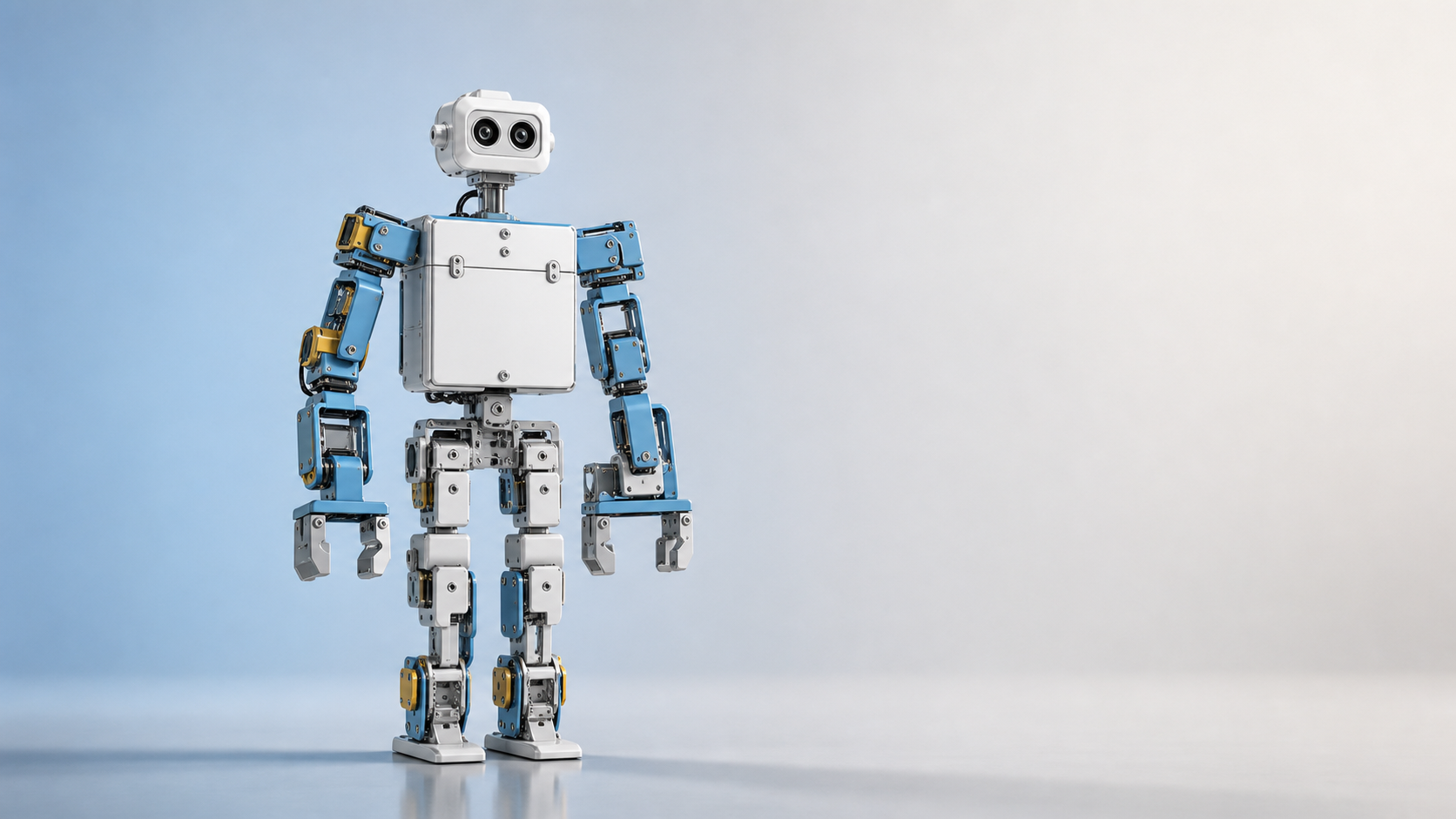
The platform is aimed at the research bottlenecks that sit between simulation and full-size humanoid hardware. Large bipeds are expensive, hazardous, slow to repair, and hard for many labs to reproduce. ToddlerBot gives researchers a whole-body platform small enough for repeated experiments while still supporting walking, balance, perception, teleoperation, and manipulation learning.
Reproducibility is the important proof surface. The paper emphasizes parts availability, calibration, maintenance, simulation transfer, and independent replication. The authors report a successful external replication of the system, which is more meaningful for a research platform than a polished single-lab demo. The question is whether other groups can actually build, maintain, and modify the robot without inheriting a hidden support burden.
The competitive field includes ROBOTIS OP3, Unitree and mini-humanoid research platforms, low-cost open-source robot projects, simulation-only humanoid benchmarks, and custom lab-built bipeds. ToddlerBot's distinction is its low-cost open build paired with learning-oriented tooling, not industrial ruggedness or commercial autonomy.
Public material does not claim factory deployment, customer adoption, or general-purpose humanoid capability. The strategic value is research leverage. If ToddlerBot keeps spreading across labs and classrooms, it becomes a shared physical benchmark for loco-manipulation work, letting researchers test embodied policies on hardware that is cheap enough to break, repair, and iterate.
Have a robotics update Korthos should review? Send news, deployments, product releases, funding rounds, research, or media to tips@korthosrobotics.com or reach out on X at @agkorthos.