
Stanford University
About
About Stanford University
Stanford University coordinates robotics research across computer science, engineering, medicine and related disciplines. The Stanford Robotics Center brings together laboratories working on domestic, medical, field, construction, logistics, manufacturing and human-robot interaction systems in shared experimental facilities.
Research groups develop autonomous-system control, robot learning, dexterous manipulation, multi-robot coordination, aerial robotics and collaborative humanoid systems. Public outputs include algorithms, datasets, open-source software and physical platforms used by researchers and industry partners rather than a commercial product catalogue.
Articles
Observed use
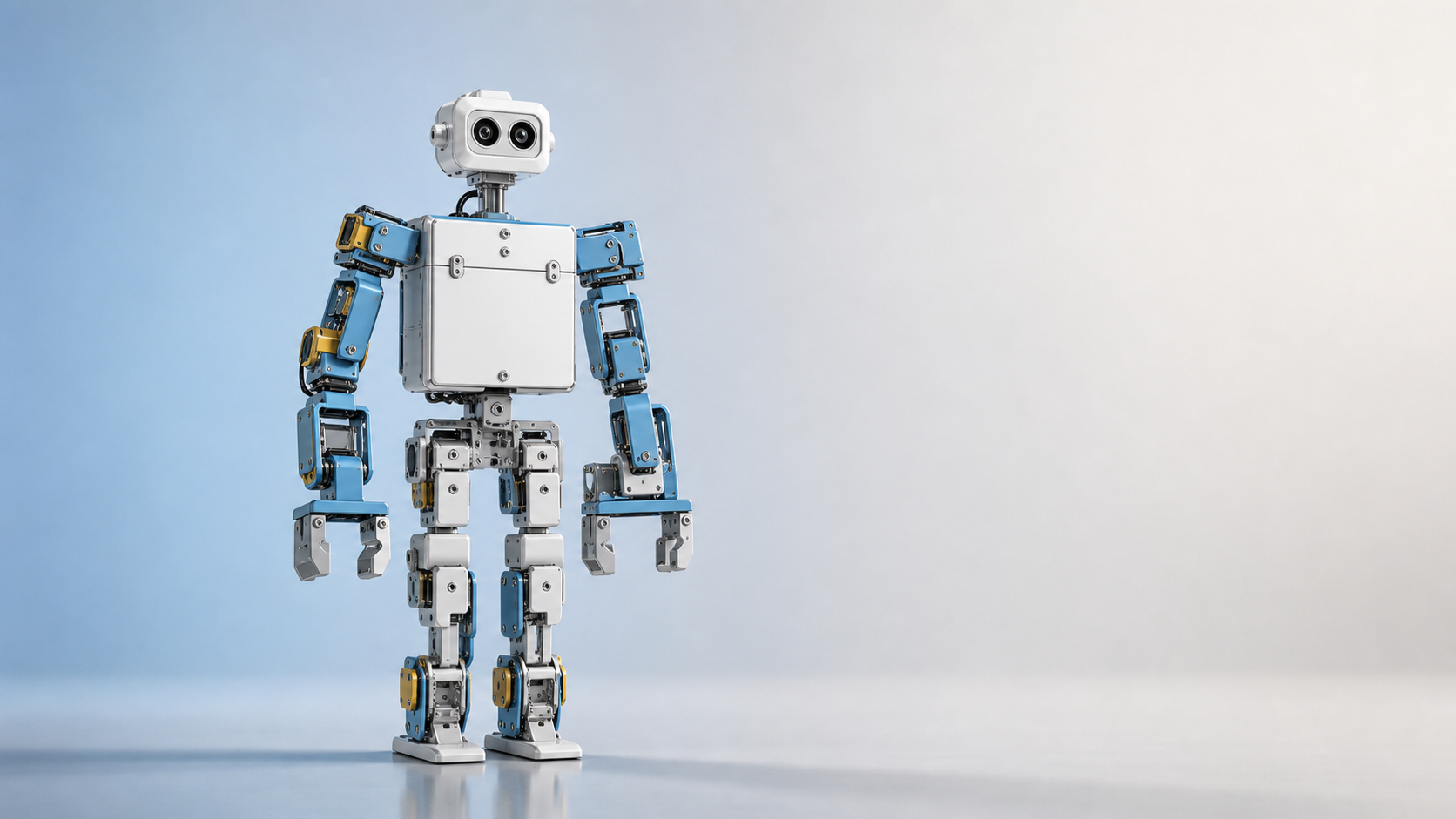
- DYNAMIXEL X Series at Stanford ToddlerBot
2025-10-06 - Research Experiment - Embedded - Stanford ToddlerBot uses a documented mix of ROBOTIS DYNAMIXEL XC330, XC430, XL430 and XM430 actuators.
Source
Team
- Steve Cousins - Executive Director, Stanford Robotics Center - Runs the Stanford Robotics Center’s operating programme and shared research facilities.
- Oussama Khatib - Director, Stanford Robotics Center - Directs the Stanford Robotics Center and its cross-disciplinary robotics programme.
Research
- Play2Perfect: What Matters in Dexterous Play Pretraining for Precise Assembly?
2026-06-24 - Research Publication - Precise assembly is contact-rich and sparse-reward, making demonstrations costly and reinforcement learning from scratch difficult. Play2Perfect first trains a dexterous hand on diverse free-space object play, then fine-tunes the reusable grasping, reorientation, and pose-reaching prior on exact assembly tasks. The authors report 33-times better sample efficiency than training from scratch, plus zero-shot sim-to-real success of 60% on 0.5 mm-clearance insertion and over 50% on multi-part assembly and screwing.
Source - Universal Manipulation Exoskeleton: Learning Compliant Whole-body Policies with Real-time Torque Feedback
2026-06-12 - Research Publication - Introduces a low-cost upper-limb exoskeleton that provides real-time haptic torque feedback while recording whole-arm configuration and joint torque signals. Retargets to multiple robot arms including OpenArm, Franka, and X-ARM for bimanual, mobile, and constrained-space manipulation. Project page and paper report improved compliant policy learning on contact-rich tasks, including force-mediated and visually occluded manipulation.
Source - Improving Robotic Generalist Policies via Flow Reversal Steering
2026-06-11 - Research Publication - Uses flow reversal to refine coarse reference actions from humans or VLMs into precise in-distribution robot actions. Supports zero-shot control, fast distillation into smaller policies, and bootstrapped RL improvement. Project page reports results on LIBERO simulation and DROID real-world manipulation; code is marked coming soon.
Source - Robots Need More than VLA and World Models
2026-06-04 - Research Publication - Argues that robot policy scaling is bottlenecked by converting unstructured data into grounded supervision. Frames four missing interfaces: behavior autolabelling, embodiment retargeting, physics-grounded 3D world modeling, and reward inference. High-engagement position paper gives useful strategic context for the VLA and world-model wave.
Source - EXPO-FT: Sample-Efficient Reinforcement Learning Finetuning for Vision-Language-Action Models
2026-05-25 - Research Publication - Introduces RL finetuning for pretrained VLA policies using online interaction, Q-guided sampling, residual edit policies, and human corrections. Reports 30/30 success across evaluated real-robot manipulation tasks with about 19 minutes of online robot data per task. Project page and arXiv paper are live; code is explicitly marked coming soon, so this is tracked as a project-page/paper artifact for now.
Source
Timeline
Events
- 2026-06-24 - Research Publication - Play2Perfect: What Matters in Dexterous Play Pretraining for Precise Assembly?
Precise assembly is contact-rich and sparse-reward, making demonstrations costly and reinforcement learning from scratch difficult. Play2Perfect first trains a dexterous hand on diverse free-space object play, then fine-tunes the reusable grasping, reorientation, and pose-reaching prior on exact assembly tasks. The authors report 33-times better sample efficiency than training from scratch, plus zero-shot sim-to-real success of 60% on 0.5 mm-clearance insertion and over 50% on multi-part assembly and screwing.
Source - 2026-06-12 - Research Publication - Universal Manipulation Exoskeleton: Learning Compliant Whole-body Policies with Real-time Torque Feedback
Introduces a low-cost upper-limb exoskeleton that provides real-time haptic torque feedback while recording whole-arm configuration and joint torque signals. Retargets to multiple robot arms including OpenArm, Franka, and X-ARM for bimanual, mobile, and constrained-space manipulation. Project page and paper report improved compliant policy learning on contact-rich tasks, including force-mediated and visually occluded manipulation.
Source - 2026-06-11 - Research Publication - Improving Robotic Generalist Policies via Flow Reversal Steering
Uses flow reversal to refine coarse reference actions from humans or VLMs into precise in-distribution robot actions. Supports zero-shot control, fast distillation into smaller policies, and bootstrapped RL improvement. Project page reports results on LIBERO simulation and DROID real-world manipulation; code is marked coming soon.
Source - 2026-06-04 - Research Publication - Robots Need More than VLA and World Models
Argues that robot policy scaling is bottlenecked by converting unstructured data into grounded supervision. Frames four missing interfaces: behavior autolabelling, embodiment retargeting, physics-grounded 3D world modeling, and reward inference. High-engagement position paper gives useful strategic context for the VLA and world-model wave.
Source - 2026-05-25 - Research Publication - EXPO-FT: Sample-Efficient Reinforcement Learning Finetuning for Vision-Language-Action Models
Introduces RL finetuning for pretrained VLA policies using online interaction, Q-guided sampling, residual edit policies, and human corrections. Reports 30/30 success across evaluated real-robot manipulation tasks with about 19 minutes of online robot data per task. Project page and arXiv paper are live; code is explicitly marked coming soon, so this is tracked as a project-page/paper artifact for now.
Source - 2025-01-01 - Partnership - Mirsee Robotics highlights MRI-safe surgical robot collaboration with Stanford University
Mirsee describes collaboration with Stanford researchers on MRI-safe surgical robots built around patented hybrid hydrostatic actuator technology. The systems are described as plastic-built robots for high magnetic and electrical-noise environments with precise force feedback. The work extends the actuator stack beyond humanoids into advanced medical robotics.
Source - 2024-04-23 - Partnership - Multiply Labs plans robotic cell-therapy collaboration with Stanford LCGM
Cell-therapy organizations will be able to compare manual processes with automated versions side by side. The robots are designed to use existing GMP instruments, consumables and reagents without major process changes. A Cytotherapy study provides the template, comparing manual and robotic cell expansion with the same equipment and materials.
Source
Relations
Relationships
- Mirsee Robotics
Mri Safe Surgical Robotics Research - Mirsee Robotics has a public partnership relationship with Stanford University focused on mri-safe surgical robotics research.
- Multiply Labs
Technology Partner - Multiply Labs and Stanford LCGM are collaborating to compare manual and automated cell-therapy manufacturing.
- Zeon Systems
Laboratory Pilot Partner - Zeon Systems reports pilot work with Stanford laboratories on scientific workflows using its off-the-shelf robot system.
Context
Shared workflows
- Airion
workflow adjacency - Robot Learning Research
- Human Robotix
workflow adjacency - Medical Robotics Research
- Humotech
workflow adjacency - Medical Robotics Research
- Simate
workflow adjacency - Robot Learning Research
- Google DeepMind
workflow adjacency - Robot Learning Research
Context tags
- Robotics research and education - Customer Environment - https://src.stanford.edu/ — exact reviewed source supports this bounded company context.
- Research labs - Customer Environment - https://src.stanford.edu/ — exact reviewed source supports this bounded company context.
- Robot learning research - Workflow - https://src.stanford.edu/ — exact reviewed source supports this bounded company context.
- Mobile manipulation research - Capability - https://src.stanford.edu/ — exact reviewed source supports this bounded company context.
- Medical robotics research - Workflow - https://src.stanford.edu/ — exact reviewed source supports this bounded company context.