Renault prepares Calvin humanoids for factory work with Wandercraft
Renault plans to deploy hundreds of Calvin humanoids developed with Wandercraft across its manufacturing operations, extending the French robotics company’s self-balancing exoskeleton work into industrial material handling.
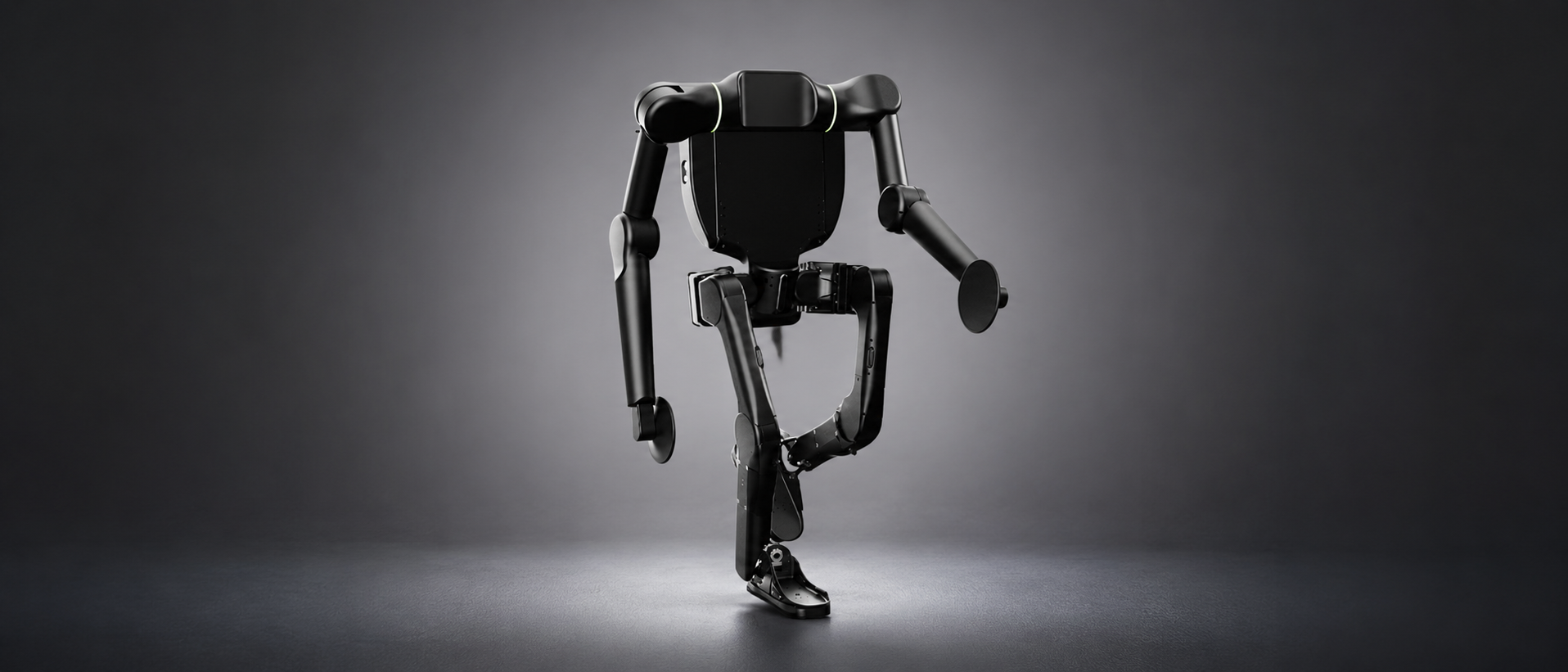
Renault began using Wandercraft’s Calvin humanoid for tyre handling at its Douai electric-vehicle plant, with plans to add hundreds of units across its manufacturing operations. The factory use followed Renault’s June 2025 minority investment in Wandercraft and commercial partnership to develop Calvin, a family of industrial robots built from Wandercraft’s self-balancing robotics work.
Wandercraft was founded in 2012 and built its early business around self-balancing medical exoskeletons. Renault described the company as the first to develop, manufacture and market medical self-balancing exoskeletons, with more than 100 Atalante devices operating in hospitals across four continents and a personal exoskeleton called Eve moving toward market entry. Wandercraft says its exoskeletons take more than one million steps each month, giving the company motion data from repeated real-world assisted walking.
Calvin extends that balance-control base into manufacturing. Wandercraft’s prior systems were built around powered walking, load transfer, fall avoidance and safe movement close to human bodies. Renault’s first application uses those capabilities for repetitive material handling on an automotive line, where the robot carries tyres rather than performing fine assembly or open-ended manipulation.
The Partnership
Renault’s June 2025 agreement made the automaker both an investor and industrial partner. The partnership covered development of Calvin first for Renault manufacturing operations, with Renault contributing industrialisation, design-to-cost and production-scaling support for Wandercraft’s robots and exoskeletons.
Renault said the robot family would be used to relieve workers from painful and non-ergonomic tasks while reducing production time. By March 2026, the first public application was tyre handling at Douai, a repetitive load-moving task inside Renault’s EV production network.
The Robot
Calvin-40 is a headless bipedal industrial robot developed with Renault. Wandercraft’s product page says the Calvin family was developed in collaboration with Renault and that Calvin-40 was developed in 40 days. Reporting around Renault’s factory plan describes the robot as able to lift about 40 kg, use waist-mounted cameras and communicate status through LED lights.
Auto Express reported the robot was working on the Douai factory supply line and would be joined by 350 additional units over the following 18 months. Other manufacturing coverage described Renault’s plan as more than 300 humanoid robots by the end of the following year, starting at ElectriCity in Douai.
Have a robotics update Korthos should review? Send news, deployments, product releases, funding rounds, research, or media to [email protected] or reach out on X at @agkorthos.