
ROBOTIS Moves Beyond Actuators Toward a Full Humanoid Stack
ROBOTIS is extending its actuator business into humanoid hardware, torque control, open development infrastructure and Physical AI.
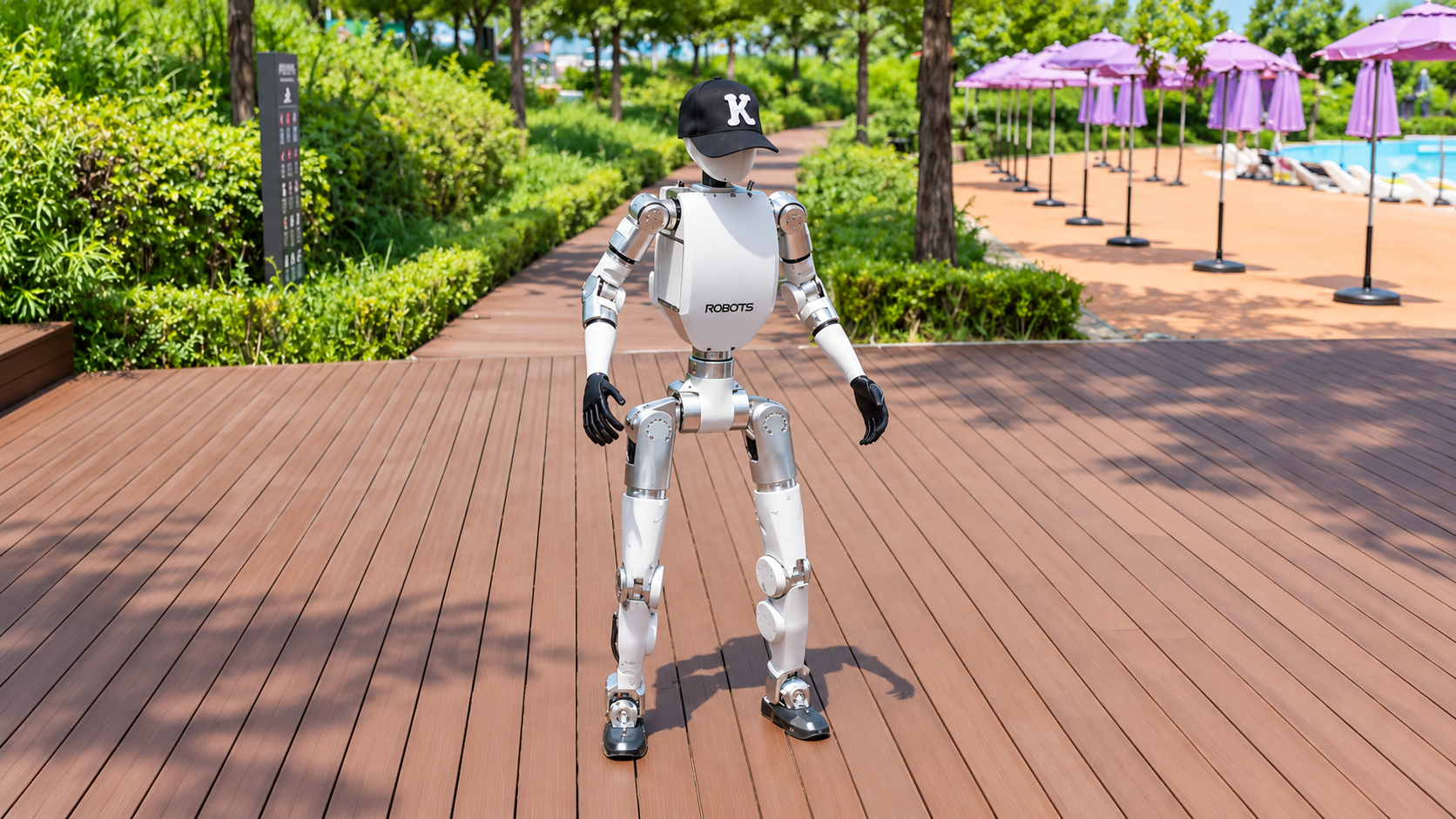
ROBOTIS is extending its actuator business into humanoid hardware and control software.
The company formalised part of that shift in April with the arrival of AI Sapiens which is an open source humanoid development platform built around their new DYNAMIXEL-Q actuator family.
The current K0 platform is 1.3M tall, weighs 34KG and has 23 DoF, with ROBOTIS releasing hardware files, source code, simulation assets and tutorials in stages. It effectively gives Korea an open source humanoid development platform in the same research segment as Chinese systems such as Unitree’s G1.
DYNAMIXEL-Q uses a quasi-direct-drive architecture with lower gear ratios, high-torque motors and integrated control electronics to support backdrivability and torque control in humanoids.
In the 2nd quarter of this year, revenue reached KRW 15.37 billion (~$11.4 million), up 95.1% year over year, while operating profit rose 722.9%. Actuators accounted for roughly 98% of sales, with growing humanoid demand cited as a major driver.
They have also been benefiting from other hyped areas of robotics, Pollen Robotics’ newly launched Microduck uses 15 DYNAMIXEL motors and surpassed 10,000 orders within days of opening preorders. This alone is demand for 150k+ servos accounted for.
ROBOTIS is now expanding their manufacturing base with construction beginning in June on a new production facility in Tashkent, Uzbekistan, covering humanoid robots and robotic components. Current plans point to actuator capacity rising from roughly 300,000 units toward more than 5 million annually by 2031. ROBOTIS has also discussed building Physical AI data infrastructure at the site.
LG Electronics, which is also ROBOTIS’s second largest shareholder with a 6.57% stake, signed an MoU in June to consider an equity investment in the Uzbekistan plant. The companies have also agreed to cooperate on actuators and humanoid R&D, including AI Sapiens.
In an interview this week, CEO Kim Byoung-soo said ROBOTIS intends to become a provider of full humanoid solutions rather than actuators alone, combining hardware and software around torque based control. Kim argued that torque control will be increasingly important as AI models move from planning into real physical interaction.
Part of the KRW88.7 billion (~$65.9 million) being raised through Kim’s recent personal stake sale is also intended for ROBOTIS AI, the company’s autonomous mobile robot subsidiary. ROBOTIS sees the software and field data generated by those systems as another building block for expanding humanoid capabilities.
Have a robotics update Korthos should review? Send news, deployments, product releases, funding rounds, research, or media to [email protected] or reach out on X at @agkorthos.