
Sunday emerges from stealth with Memo, a home robot trained on 10 million household episodes
Founded by the creators of ALOHA and Diffusion Policy, Sunday has assembled a 10-million-episode domestic training dataset across 500 homes using its Skill Capture Glove
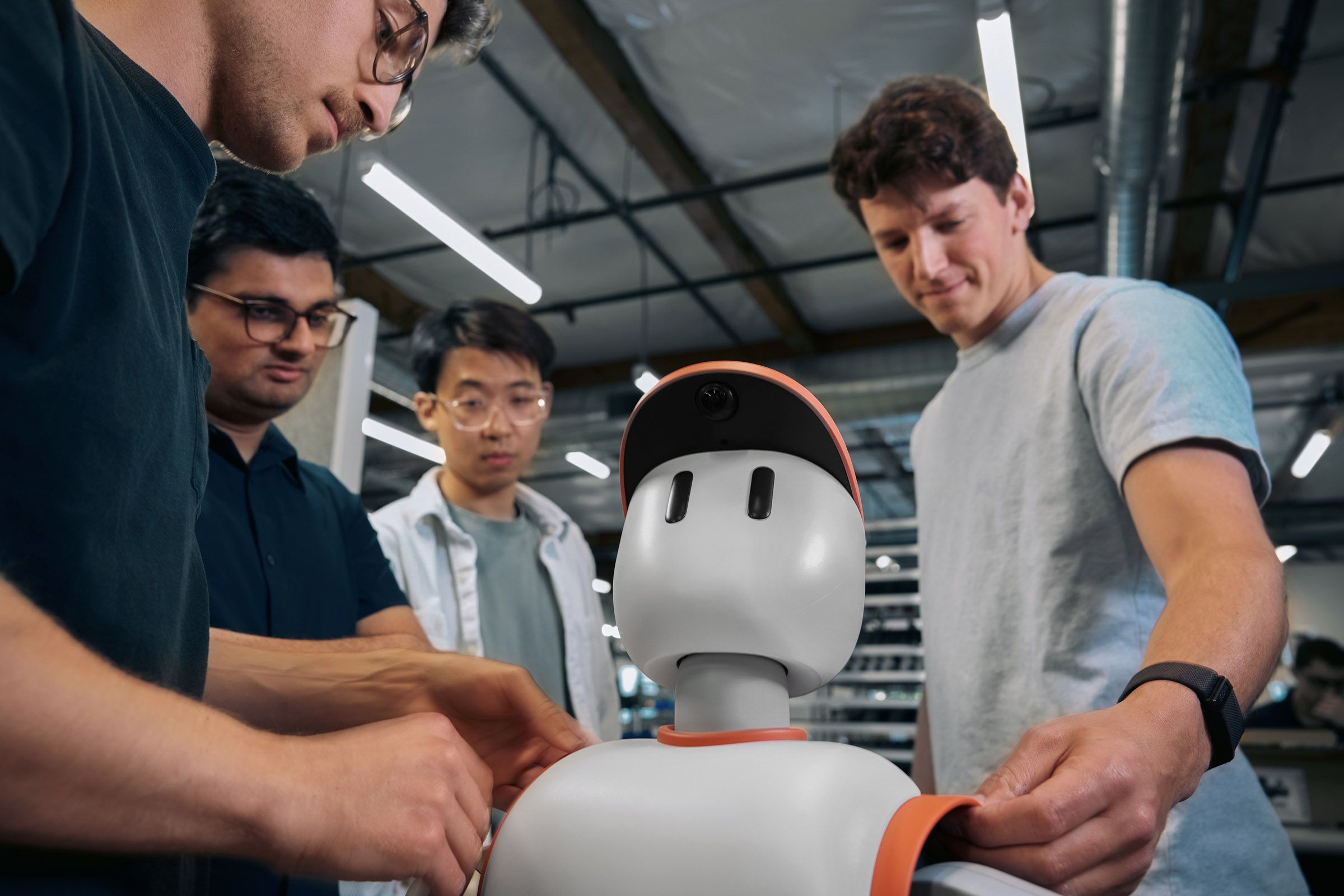
Sunday, a Mountain View-based robotics startup, emerged from stealth in November 2025 with $35 million in backing from Benchmark and Conviction and a home robot called Memo, designed to assist families with dishes, laundry, and general tidying. The company already had 1,000 people on its waitlist at the time of emergence.
The Founders
Sunday was founded by Tony Zhao and Cheng Chi, both Stanford-trained roboticists. Zhao co-created ALOHA, a low-cost bimanual robot platform used in manipulation research. Chi co-developed Diffusion Policy, a method for learning robot actions from demonstrations used in systems including Physical Intelligence's π0.
Most home robot startups rely on teleoperation, where a human controls the robot in real time to generate demonstrations. Sunday's stated approach is different; Memo is an autonomous robot that does not need to learn through human teleoperation. The training data comes from a different mechanism entirely.
The Data Strategy
Sunday developed the Skill Capture Glove, a wearable device that records human hand and arm movements during daily household routines. The captured motion data trains Memo's machine learning models so the robot can reproduce tasks it has observed in real homes. The company has shipped over 2,000 gloves to what it calls Memory Developers, people who wear the glove during their own household routines and contribute data to Memo's training corpus. The dataset now contains approximately 10 million episodes of authentic household routines collected from more than 500 homes.
Memory Developers are not employees; they are households that have opted into the programme, creating a distributed data collection network that scales independently of Sunday's own operations. The 10 million episode figure is the output of that network.
The Robot
Memo is built on a rolling base with a soft silicone-clad design and purpose-built residential hardware. Its arms can lower to touch the ground or extend to seven feet; for most household tasks it operates at around four feet. In December 2024, Memo had one arm and learned its first task; arranging shoes. By October 2025, the robot had learned to fold piles of socks, handle glassware, and pull a shot of espresso.
Sunday's team of 25 engineers and researchers includes people from Stanford, Tesla, DeepMind, Waymo, Meta, and Neuralink.
Building a single Memo today costs approximately $20,000, reflecting custom components and no economies of scale. Sunday expects retail pricing to be at least 50% lower once manufacturing scales; exact pricing will be announced closer to launch. Applications for the Founding Family Beta opened at stealth emergence, with 50 households to be selected for late 2026 delivery.
Have a robotics update Korthos should review? Send news, deployments, product releases, funding rounds, research, or media to [email protected] or reach out on X at @agkorthos.