
State of the Machines: Humanoid Production Claims Are Accelerating
Humanoid production claims are accelerating; here is where the numbers actually stand.
Track the machine economy
Email briefings on intelligent machines, funding moves, deployments, launches, markets and supply-chain signals.
The Read
Humanoid production claims are accelerating; here is where the numbers actually stand.
In 2025, the disclosed production leaders were Unitree, with more than 5,500 humanoids shipped and more than 6,500 produced and AGIBOT, which claimed 5,168 units produced across its wheeled and bipedal lines.
In 2026, production claims have started to ramp across the board.
The recurring number is 10,000 units; but that figure means different things depending on who is saying it. Sometimes it is a factory ramp plan. Sometimes it is an annual capacity target. Sometimes it is a production-line milestone. The definitions are not consistent across companies.
Not every OEM discloses numbers regularly and many claims will not materialise on the stated timeline. But the direction is clear. The conversation is shifting from demos to production cadence, factory capacity and delivery intent.
China is still leading that shift. But Western developers are now putting clearer numbers into the market too.
1X has disclosed capacity of up to 10,000 NEO units per year, with a path to 100,000+ annually by end-2027; Figure moved from one robot per day to one per hour at BotQ in under four months; NEURA is targeting 6,000 units this year, aiming to scale toward tens of thousands in 2027.
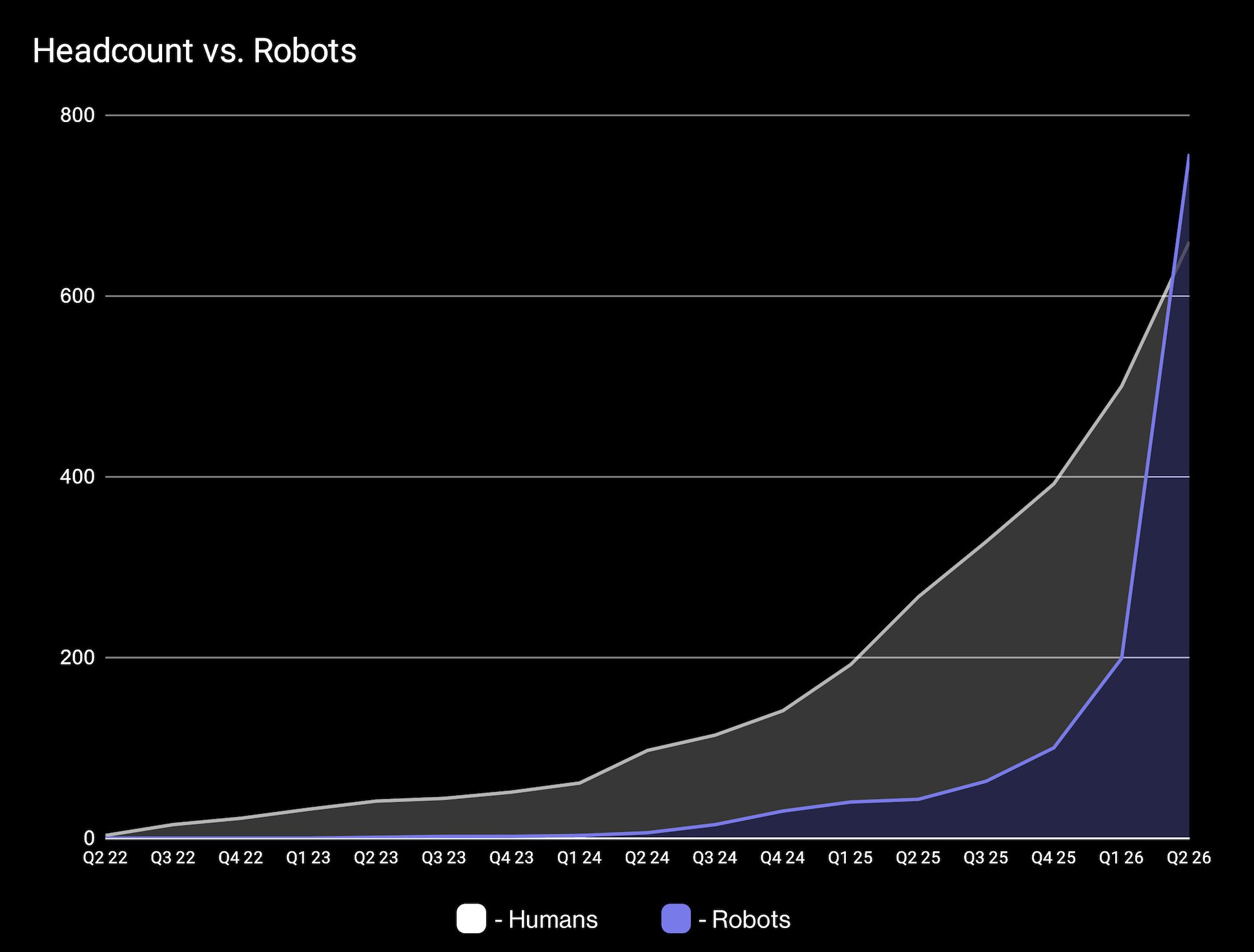
As part of this production trend, Figure founder Brett Adcock recently shared that the company now has more robots than headcount.
Source: Figure
The table below covers a small segment of recently disclosed signals.
 AGIBOTChinaGAC / Huilun TechChina
 Akin RoboticsTurkiyeDAX RoboticsChinaUnitreeChina
 NEURA RoboticsGermanyXPeng IRONChinaUnitreeChinaEngineAIChinaMatrix RoboticsChina
 HumanoidUK
 1XU.S.FigureU.S.
 HexagonSwedenLeju RoboticsChinaUBTECHChina
AGIBOT as the latest example
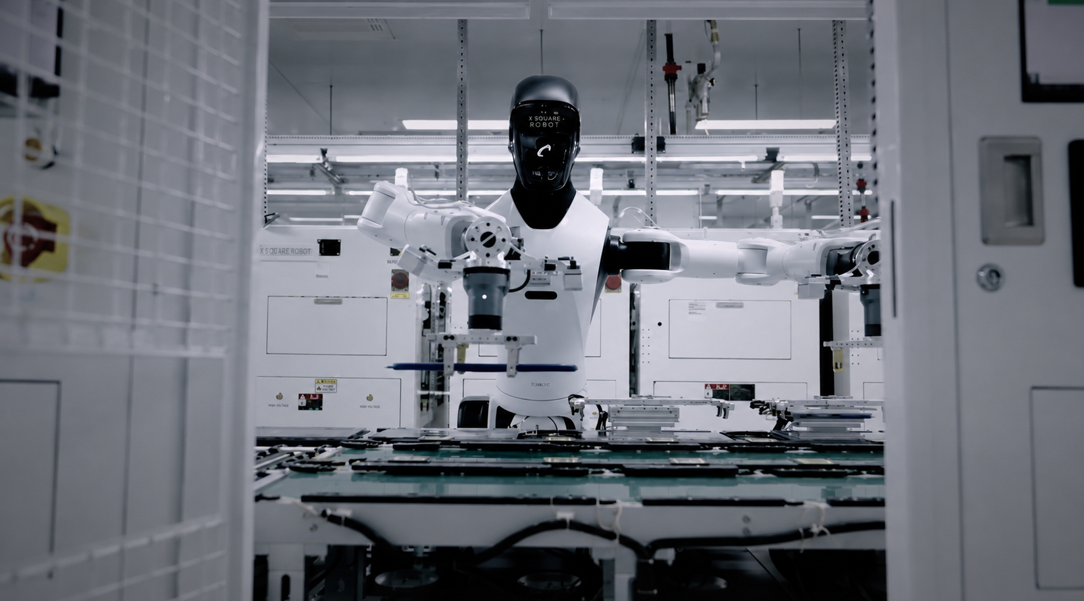
One thing that tends to get left out of these conversations is where these units will actually operate and what they will do when they get there. AGIBOT has shown some accounted for this week.
The company says its 15,000th robot to roll off the line was a Genie G2 delivered to Longcheer Technology.
Longcheer had already placed a several-hundred-million-RMB framework order for nearly 1,000 AGIBOT G2 robots, focused first on tablet production lines in consumer-electronics manufacturing.
AGIBOT also recently streamed G2 robots working inside Longcheer’s Nanchang tablet production quality-inspection line.
Across six consecutive days, AGIBOT said the robots operated for 64 hours under live factory conditions, completing 64,828 robot tasks with a claimed 99.99 percent success rate.
The company has described the work around the tablet line in more specific terms than a generic factory deployment: flexible grasping, multi-station collaboration, production-line data linkage, high-speed line picking, test-equipment interaction, fixture loading and sorting.
Those figures should still be treated as company-reported. But they are more useful than a standalone production number because they connect output, customer delivery, order backlog and a live production workflow.
Track the machine economy
Email briefings on intelligent machines, funding moves, deployments, launches, markets and supply-chain signals.