Global production · 2025
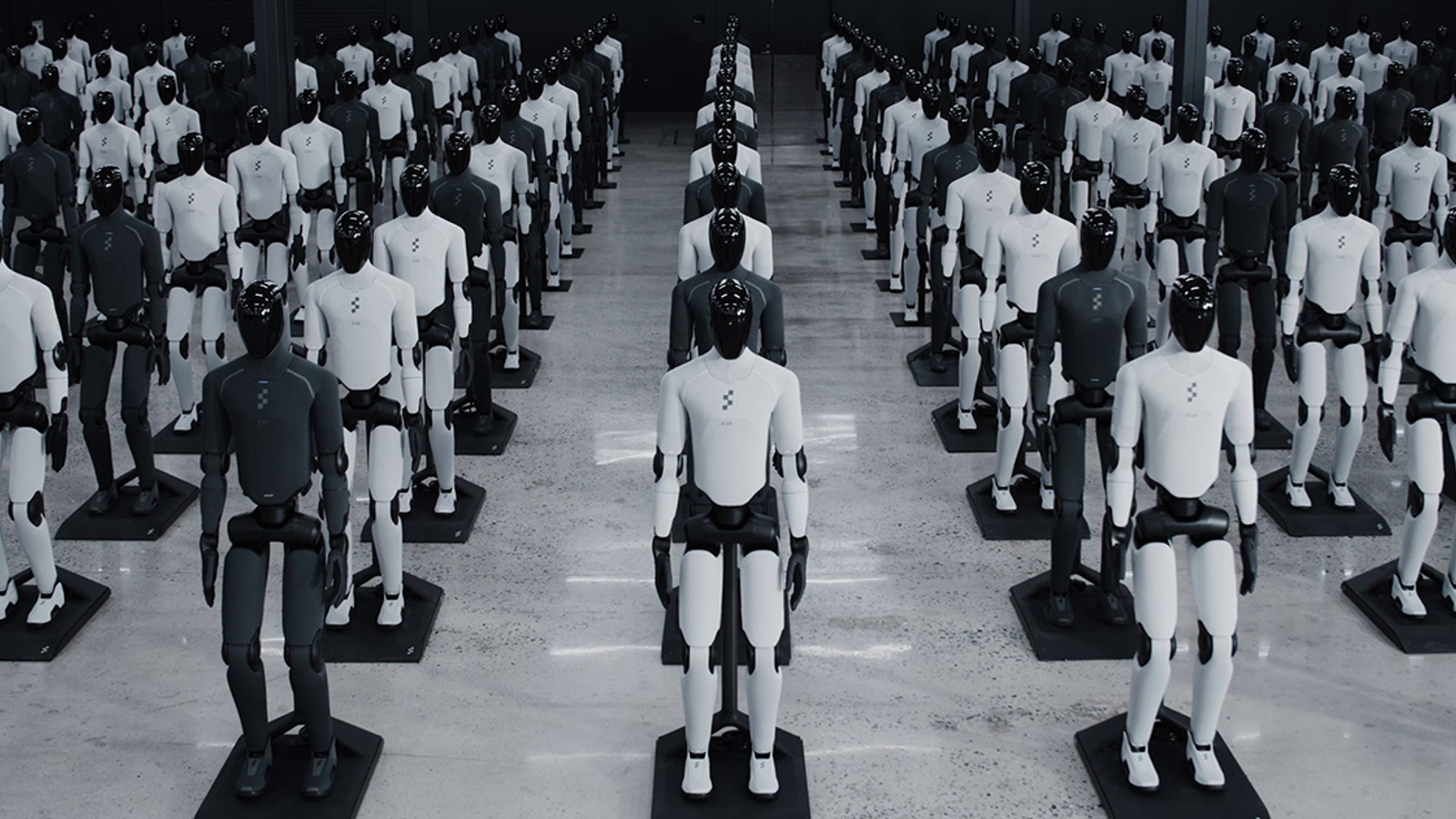
20,000+
Humanoid robots produced worldwide, estimated by Interact Analysis. Output was below 2,000 in 2024.
Sources
Research estimate published 11 June 2026. Production counts robots built, across their intended applications; it does not measure commercial use. The analyst’s total is separate from the individual company disclosures below.
Interact Analysis · Humanoid Robots 2026Production concentration · 2025
Chinese manufacturers>90%
Five largest producers≈70%
Unitree and AgiBot together exceeded 11,000 units, accounting for more than half of global output.
Sources
Both shares use Interact Analysis’s 2025 global production estimate. The five largest producers were all Chinese; these groups overlap and their shares are not added together.
Interact Analysis · 11 Jun 2026Global shipments · H1 2026
22,000+
Counterpoint estimates shipments grew nearly 300% year on year. Entertainment, performance, data collection and research still accounted for more than 60%.
Sources
Counterpoint’s August 2026 release measures shipments, separate from Interact Analysis’s 2025 production series. Its forecast of more than 50,000 shipments for full-year 2026 is forward-looking.
A separate IDC estimate, cited by AgiBot on 30 September, puts H1 shipments near 25,000. The analyst totals use separate research series and are not combined or averaged.
Counterpoint · August 2026
IDC · cited by AgiBot, 30 Sep 2026Real-world adoption · 2025
≈10%
Share of robots produced that Interact Analysis says reached real-world applications. Most such projects remained small pilots or proofs of concept.
Sources
This is the analyst’s application classification for 2025, not a measure of autonomous working hours, profitable installations or sustained commercial use. Production growth alone does not establish deployment at scale.
Interact Analysis · 11 Jun 2026Actuation’s share of hardware cost
40–60%
Indicative share of humanoid hardware bill of materials. Actuation includes motors, transmissions, joint assemblies and integrated sensing and drive electronics.
The split varies with robot design, production volume and whether hands are costed separately.
Sources
McKinsey reports the 40–60% range. Schaeffler provides a supplier assessment; Interact Analysis distinguishes configurations; BofA’s 51% is a 2030 hardware BOM forecast.
McKinsey · humanoid supply-chain analysis · 2026-04-17
40–60% of BOM for actuation. Hand components generally sit within actuation and sensing; separately procured hand subsystems are distinguished.
Schaeffler · Humanoids presentation, pp. 11–12 · 2026-02
Approximately 50% for rotary and linear actuators. Robot configuration and production-volume basis: unspecified.
Interact Analysis · joint-actuator research · 2025-06
Joint actuators exceed 30% of BOM in high-configuration robots with dexterous hands and advanced sensors; some basic versions exceed 50%. The estimates cover different robot configurations.
Bank of America Institute · Physical AI, part 2, p. 5 · 2026-03-12
Projected 2030 BOM: linear actuators 27% plus rotary actuators 24%, totalling 51%. Dexterous hands are a separate 19% category.
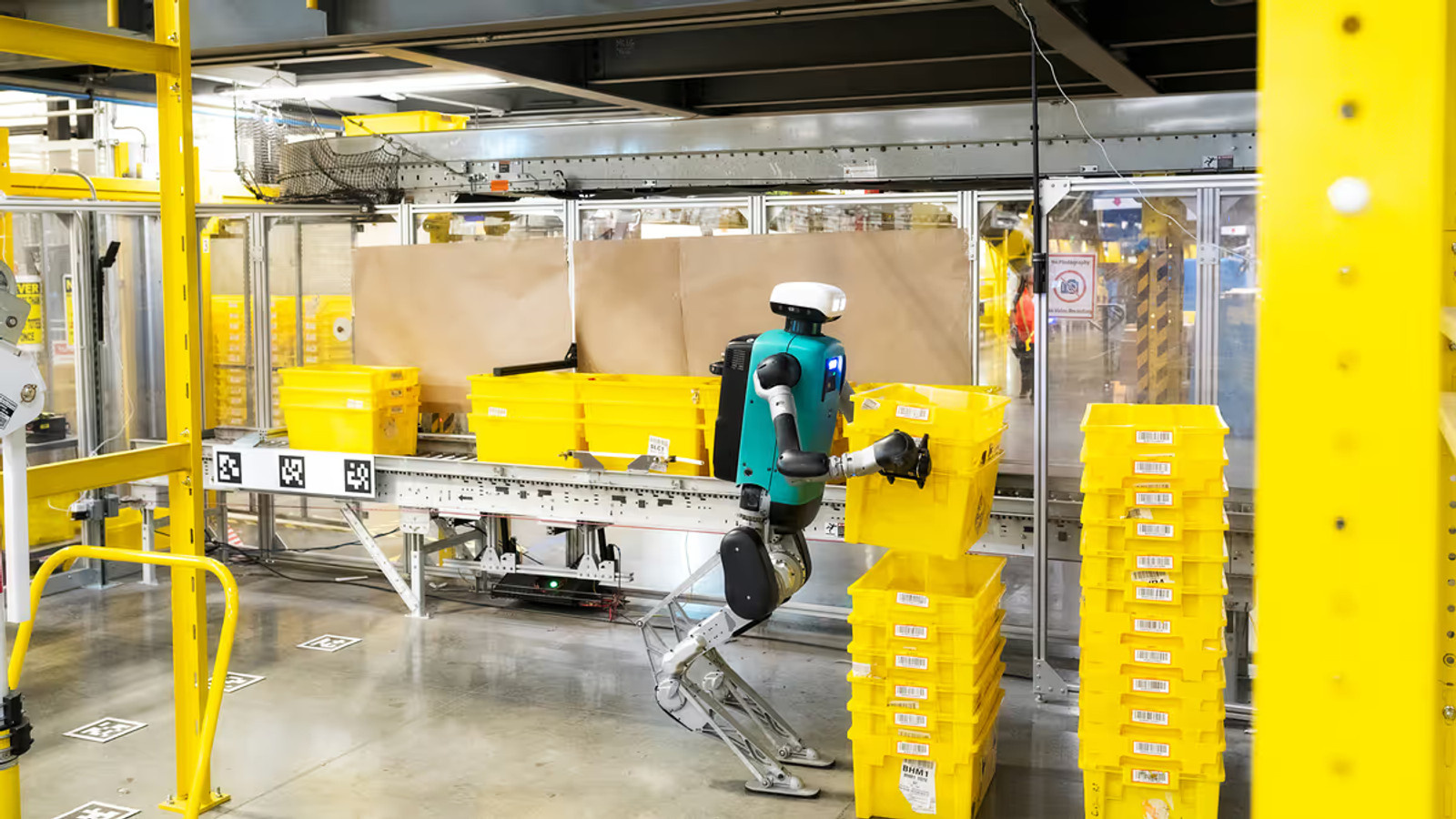
Digit 5 hardware cost
≈$150k at launch
Agility estimates launch hardware BOM at about US$150,000 per robot. Its scale targets are about US$75,000 at 1,000 robots/year and US$30,000 at 10,000 robots/year.
Both lower figures are production-volume targets, not current costs.
Sources
Agility’s 6 October 2026 investor presentation, slides 57–58. Values are approximate readings of the company’s illustrative cost curve. Production volumes are annual scenarios, and the reductions are forward-looking targets. BOM covers hardware parts, separate from selling price and operating cost.
Agility · Analyst & Investor Day 2026