
State of the Machines: Humanoid factories, defence contracts and the robot stack
Robotics signals this week clustered around routes into production: procurement awards, named operating sites, humanoid manufacturing access and robot-learning infrastructure.
Track the machine economy
Email briefings on intelligent machines, funding moves, deployments, launches, markets and supply-chain signals.
Lead Moves
The week's dominant signal: three European industrial deployments confirmed binding contracts, while China's production lines posted unit-rate claims. Defence autonomy procurement expanded on two continents.
1. Defence autonomy moved deeper into procurement and production
The MQ-25A Stingray LRIP clearance is the week's most structurally significant defence signal. Low-rate initial production means the Navy has moved Boeing's carrier-based uncrewed refuelling aircraft past the prototype and testing gate into manufacturing reality, a threshold that relatively few autonomous platforms reach. Carrier aviation is one of the most demanding and consequential deployment environments in defence.
The second signal worth separating out is Perennial Autonomy's $500 million JIATF-401 counter-UAS procurement contract. Counter-UAS is now large enough to generate nine-figure procurement awards from a standing task force.
2. HMND/Schaeffler turned humanoid deployment into a supply-chain story
This week, UK-based Humanoid partnered with Bosch. Its HMND 01 had previously completed a March proof of concept at Bosch’s Bühl logistics environment, moving boxes from conveyor to trolley across five box sizes and varying footprints, heights and weights. The May 21 agreement makes Bosch Humanoid’s contract manufacturing partner for HMND 01 in Europe, with Bosch also supporting design for manufacturing, production, supply chain and cost optimisation.
On May 13, Reuters reported Humanoid’s plan to deploy 1,000–2,000 robots across Schaeffler manufacturing sites by 2032, starting with Herzogenaurach and Schweinfurt from December 2026 to June 2027. They also have a separate actuator supply agreement making Schaeffler the preferred supplier for more than half of Humanoid’s joint-actuator demand for wheeled platforms through 2031.
3. Warehouse and facility robotics kept producing named customer evidence
Warehouse and facility automation continued to generate some of the cleanest commercial records in robotics because the claims arrive with customers, sites, tasks and operating environments.
Geekplus reported a Schneider Electric robotic picking deployment that doubled manual throughput. Romark Logistics selected DexoryView for warehouse visibility in Hazleton. Primech AI signed a three-year Hytron leasing deal for a Singapore public-sector facility.
Locus Robotics acquired Nexera Robotics to expand Locus Array mobile manipulation. The acquisition sits next to the week's warehouse evidence from Geekplus, Romark/Dexory and Primech/Hytron, giving warehouse robotics both customer deployments and M&A activity in the same week.
4. A new unicorn is born
AGILINK crossed the billion-dollar valuation threshold this week, four funding rounds after spinning out of AGIBOT as a standalone entity in January 2026. The company focuses on one component: dexterous hands and grippers for humanoid robots.
Total disclosure sits at over 8,000 dexterous hands and 10,000 grippers shipped with nearly 1,000 units running 8-hour continuous shifts in warehouses, pharmacies and factories. Its OmniHand 3 Lite, described as the smallest mass-produced dexterous hand globally, sized roughly like a computer mouse, enters mass production and delivery in Q2 2026.
The investor list includes Hillhouse, Baidu Ventures, YF Capital and SAIC Finance. The round closed approximately 100 days after the previous one.
5. The robot stack became easier to see
The week was not only about robot brands. It also exposed the systems underneath them: sensing, simulation, edge perception, RF, motor control, electronics manufacturing and inspection workflows.
Hesai's 118,282 Q1 robotics lidar shipments, up 137.8% year on year, made the sensing layer unusually visible. RoboSense went further: 185,500 robotics units in Q1 surpassed its automotive ADAS segment for the first time, at a gross margin of 39.7% versus 19.1% in ADAS. The crossover is RoboSense's story specifically; at Hesai, robotics remains around a quarter of total shipments. But the growth trajectory at both companies points the same direction: robotics is now a material and fast-expanding demand driver for lidar, not a secondary category.
Chart of the Week
Multiple humanoid manufacturers are positioning to ramp up production.
For context, Unitree was the clearest 2025 production benchmark, disclosing 6,500+ pure humanoids produced.
 EngineAIMatrix Robotics
 Humanoid
 Hexagon AEONZhejiang Humanoid
 Figure AI1XTesla OptimusLeju RoboticsAGIBOT
Chart note: this is a production-ramp chart, not a delivery chart. Capacity claims, factory plans and customer rollout targets are included as production-access signals; they should not be read as shipped-unit counts.
The Ledger
The Ledger tracks the underlying robotics tape: funding, deployments, procurement, production, research artifacts and stack-level moves referenced in the issue.
Differential RoboticsOriginFlow Roboxi
 August RoboticsDoozy RoboticsCircuitHub
 ANSCER RoboticsHypershellAGILINKHellbender
 GeekplusSchneider ElectricRomark LogisticsDexoryView
 Primech AIHytronGecko RoboticsOuster Rev8 lidarShield AIPerennial Autonomy
 Origin RoboticsU.S. Navy / BoeingTeledyne FLIR DefenseHesaiHellbenderNotchSeed Robotics / SCHUNK
 Kawasaki / NVIDIALocus Robotics
 Ondas / OmnisysXPENG
Company Watch
Kawasaki
Kawasaki Heavy Industries opened the Kawasaki Physical AI Center San Jose on May 21, with NVIDIA, Microsoft, Analog Devices and Fujitsu named as partners at launch. The opening ceremony came a day before the formal press release, with Nikkei breaking the story first.
Kawasaki's robotics division generates roughly $583 million in annual revenue, concentrated in semiconductor manufacturing equipment, the kind of precision, high-value industrial robotics that rarely gets discussed in humanoid coverage but underpins a large slice of actual factory automation. Opening a Silicon Valley centre with this partner roster is a deliberate repositioning move: talent recruitment, US customer demonstrations and physical AI development under one roof.
The NVIDIA partnership specifically applies simulation technology to Corleo, Kawasaki's four-legged personal mobility robot currently in development. an unusual product category sitting between industrial robot and personal vehicle.
The centre connects to Kawasaki's Innovation Centre Europe in Strasbourg, opened March 2026, giving the company a triangulated physical AI infrastructure across Japan, Europe and now Silicon Valley within a single quarter.
Source: Kawasaki Corleo
Research Notable
LeRobot Humanoid
LeRobot Humanoid is the week's strongest open-hardware release. The project is designed for robot learning, costs about $2,500 in parts and packages the bipedal platform with hardware files, assembly documentation, runtime, identification tools and training environments.
PsiBot SynData
SynData is the week's strongest dataset artifact. The egocentric subset lists 313,674 clips, and the dataset page reports 449,363 total rows and 29.3 TB total file size. The modalities include head RGB, head depth, camera intrinsics, head IMU, wrist pose, hand joint states, fingertip keypoints and glove tactile signals depending on subset.
State-dependent AMP on Unitree G1
The state-dependent AMP paper proposes one policy for walking, running and fall recovery on Unitree G1 hardware. The paper says the policy runs at 50 Hz and does not require explicit runtime mode-switching during deployment.
RIO
RIO belongs in the infrastructure column because it targets real-time robot I/O across morphologies rather than one specific robot. The paper validates workflows across single-arm, bimanual and humanoid setups, and describes data collection and policy rollout across different robots, grippers, cameras, teleoperation interfaces and policy families.
Fraunhofer IPA Humanoid Benchmark
Fraunhofer IPA published a modular third-party evaluation framework for humanoid robots, tested against the Unitree G1. The benchmark covers six criteria including manipulation, locomotion, sensing, energy efficiency and IT security. The framing is explicitly industrial: the tool is designed to help manufacturers and end users assess whether a specific humanoid is ready for a specific application, rather than compare robots on demo performance. It is the first neutral, third-party benchmark structure of this kind from a major European research institution.
Watchlist
Orbit Robotics / HELIOS
Orbit Robotics put HELIOS on watchlist with a teaser, four arms, four hands, no legs, and a cable-driven body built for microgravity work.
Orbit frames HELIOS as the result of two semesters of work, research and iteration, with the robot designed around space-station tasks where limbs are used for anchoring, translating, stabilising and manipulating rather than walking. The company also has IKARUS, a separate platform it says was built in two months for teleoperation, imitation learning and hardware iteration.
For now it’s just an early reveal with minimal information provided; more on the robot will be presented at ETH Focus Rollout on May 27.
Oddball of the Week
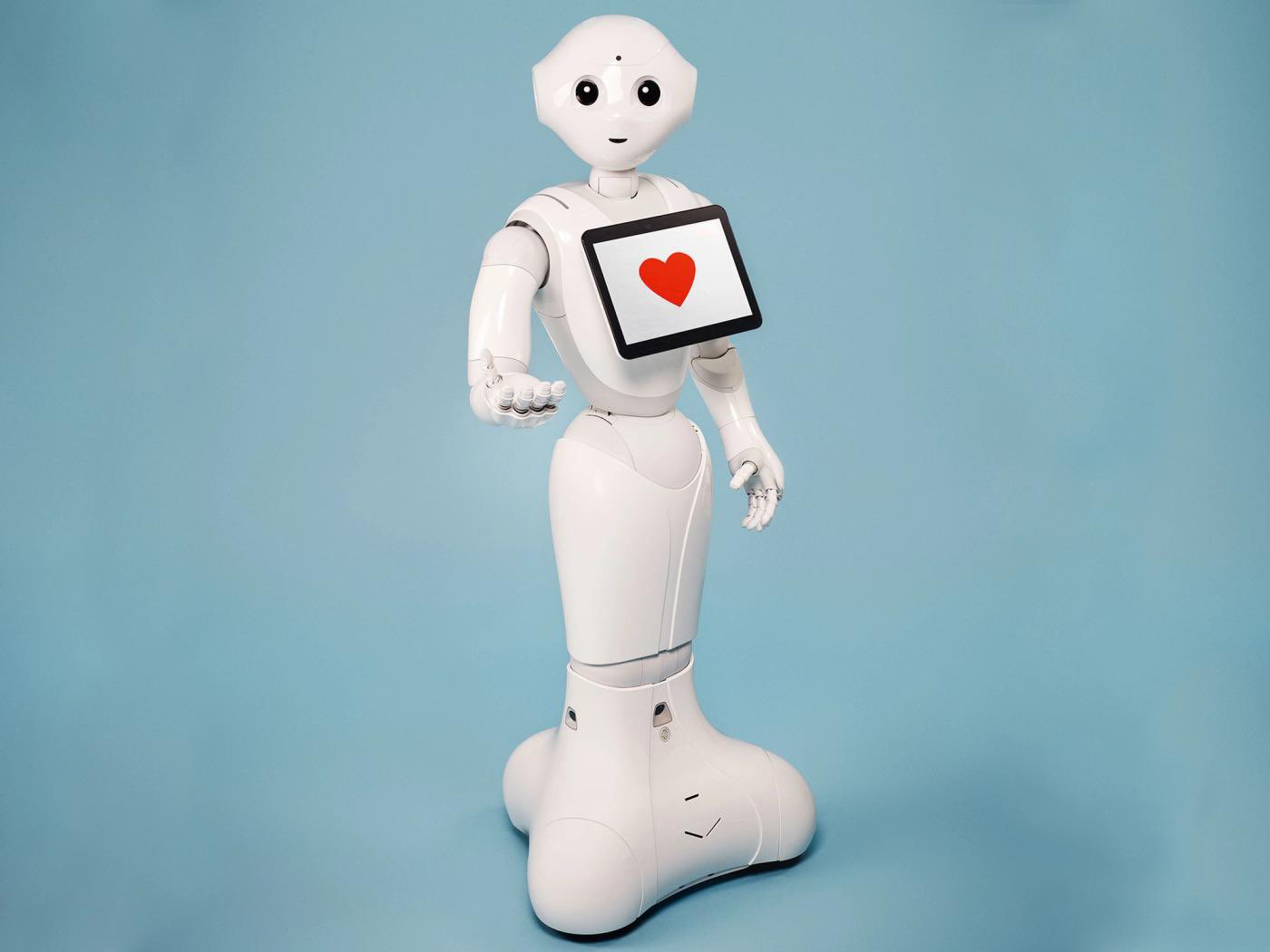
Pepper returns as an elder-care subscription robot
HOMY Robotics is bringing Pepper back as an aging-at-home companion: a SoftBank Robotics Pepper base with care-focused software, a $200 refundable reservation, founding pricing of $499 per month or $10,000 to own, and first cohorts claimed for late 2026.
The functions are the familiar social-robot bundle: conversation, medication prompts, fall detection, telepresence and family updates. The difference is the brief. Pepper was originally stretched across too many settings, shops, banks, hospitals, restaurants, schools, care homes, as a general social interface. HOMY is narrowing the same basic idea to one use case: an older person at home, with the family as the buyer and monitor.
Pepper did not fail because nobody wanted a friendly robot in theory. It failed because the hardware, software and economics never matched the breadth of the promise. HOMY’s version tests whether a narrower care workflow, upgraded AI and subscription pricing can make the old social-robot model less vague.
For now, this is a watchlist item: a relaunch of a known platform, not proof that Pepper has found its second market.
Have a robotics update Korthos should review? Send news, deployments, product releases, funding rounds, research, or media to tips@korthosrobotics.com or reach out on X at @agkorthos.
Track the machine economy
Email briefings on intelligent machines, funding moves, deployments, launches, markets and supply-chain signals.