
Aluminium alloys
Aluminium alloys form frames, links and joint housings. Their low density reduces moving mass; the finished geometry carries loads and maintains alignment.
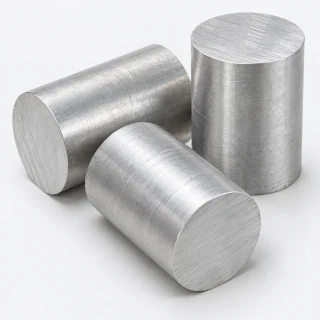
Forms & grades
- Wrought alloys
- Extruded profiles, plate and billet for machined links and mounting faces.
- Casting alloys
- Near-net-shape housings with local machining at precision interfaces.
- Surface treatment
- Anodizing converts the surface to a wear-resistant, electrically insulating oxide. Sealing improves corrosion protection; cutting afterwards exposes untreated metal.
Component applications
Manufacturing processes
- Extrusion or casting
- Heat treatment
- Interface machining
- Surface treatment
Production equipment1
- DMG MORIFive-axis machining centres
Five-axis machining cuts housing interfaces, mounting faces and complex tooling. The same machine class produces structural parts and moulds from solid stock.
Precision machining →Sources
Actuator housings and robot structures · machined interfaces and tooling
DMG MORI · structural components, housings and die-and-mould machining

Manufacturer examples
Hydro · extrusion engineering

Hydro offers aluminium application development, engineering analysis and prototyping. These services sit between material selection and a finished structural part.
Hydro · aluminium engineering and prototypingSources & technical scope
References cover material grades, manufacturing processes and application examples.
Hydro · bauxite, alumina, electrolysis, casting and recyclingNASA: composite joint designNASA: thermal stress at metal–composite jointsEnsinger: polymer stiffness, temperature and creepigus: specifying cables for robot motionTE Connectivity: robot connector selectionKollmorgen: frameless motor housings and thermal integrationSKF: aluminium housings and bearing fits (pp. 42, 70)Hydro: alloy choice and material strengthHydro · anodizing sequence, pp. 6–9