
XTENDER
About
About XTENDER
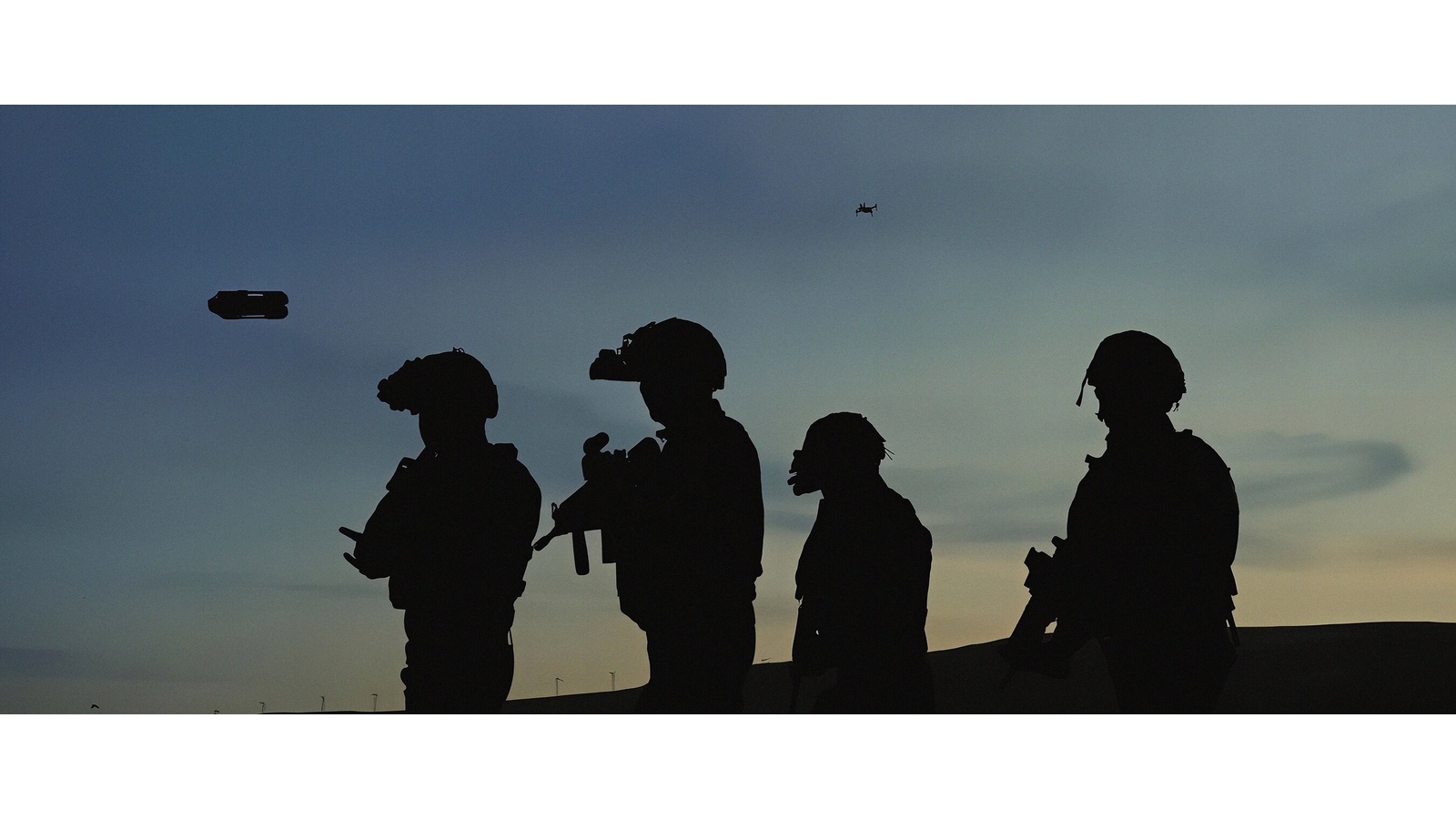
XTENDER is a compact tactical indoor aircraft designed to enter buildings, tunnels and other confined environments ahead of personnel. The approximately 1.2-kilogram system carries up to 150 grams, flies for around ten minutes and communicates beyond 1.6 kilometres under suitable conditions.
Immersive control and XOS flight assistance let an operator navigate without conventional piloting skills, while skid movement allows the aircraft to travel across floors and automatic recovery can restore flight after contact with a wall or inversion. AES-256 encryption, ATAK integration and ground-, hand- or air-launch options support reconnaissance, inspection and remote intervention in high-risk environments.

Capabilities
Source-backed capabilities
- Capability areas: Autonomous navigation, Remote operation
- Workflows: Tactical ISR mission, Tactical reconnaissance
- Operating environments: Defence operational environment, Outdoor field environment
- Target markets: Defense users, public-safety teams, inspection providers and operators using drones for mission work.
- Deployment model: Commercial or available product positioned for customer use, integration or developer adoption.
- GNSS-denied navigation
Customer-site use - 2026-07-03 - The drones operated in collapsed-structure and GPS-denied environments.
Source - Remote and shared control
Claimed - XTEND presents XTENDER for remote sensing, inspection and intervention in high-risk environments while retaining human control.
Source - Search and rescue
Customer-site use - 2026-07-03 - Honey Badger and XTENDER systems were used by Mexican search-and-rescue responders in Venezuela.
Source - Robotic inspection
Claimed - XTEND presents XTENDER for remote sensing, inspection and intervention in high-risk environments while retaining human control.
Source
Timeline
- XTEND drones support Venezuela search-and-rescue deployment
2026-07-03 - Deployment - Honey Badger and XTENDER systems were used by Mexican search-and-rescue responders in Venezuela. The drones operated in collapsed-structure and GPS-denied environments. The deployment supported rescue work after the La Guaira disaster, including locating a man trapped for more than 72 hours.
Source
Context
Market context
XTENDER is XTEND's micro tactical ISR drone system for indoor operations, close-quarters inspection and constrained-environment awareness.
- Target environment: Field sites, tactical environments, inspection routes and aerial operations where unmanned aircraft can collect data or perform missions.
- Workflow context: Aerial reconnaissance, inspection, sensing, payload delivery, tactical operation and remote mission support.
- Customer context: Defense users, public-safety teams, inspection providers and operators using drones for mission work.
- Deployment model: Commercial or available product positioned for customer use, integration or developer adoption.
- Commercial maturity: Publicly presented as commercial or available, with maturity depending on deployment scale and support coverage.
- Adoption constraints: Adoption depends on regulation, endurance, payload fit, communications, weather tolerance, training and mission approval.
- Market position: XTENDER sits in the unmanned-aircraft lane, where mission payload, autonomy and operational workflow define value.
- Adjacent products: Skydio X10, PDW C100, XTEND Scorpio, AeroVironment Puma
Comparable Systems
- Dronut DD1
Cleo Robotics - UAV
Related Systems
- SCORPIO 1000
XTEND - UAV
- SCORPIO 500
XTEND - Reconnaissance UAV
- Anvil
Anduril Industries - UAV
- Gobi
Harmattan AI - UAV
- V-BAT
Shield AI - UAV
- AirTruck
ACSL - UAV