Liquid Robotics
About
About Liquid Robotics
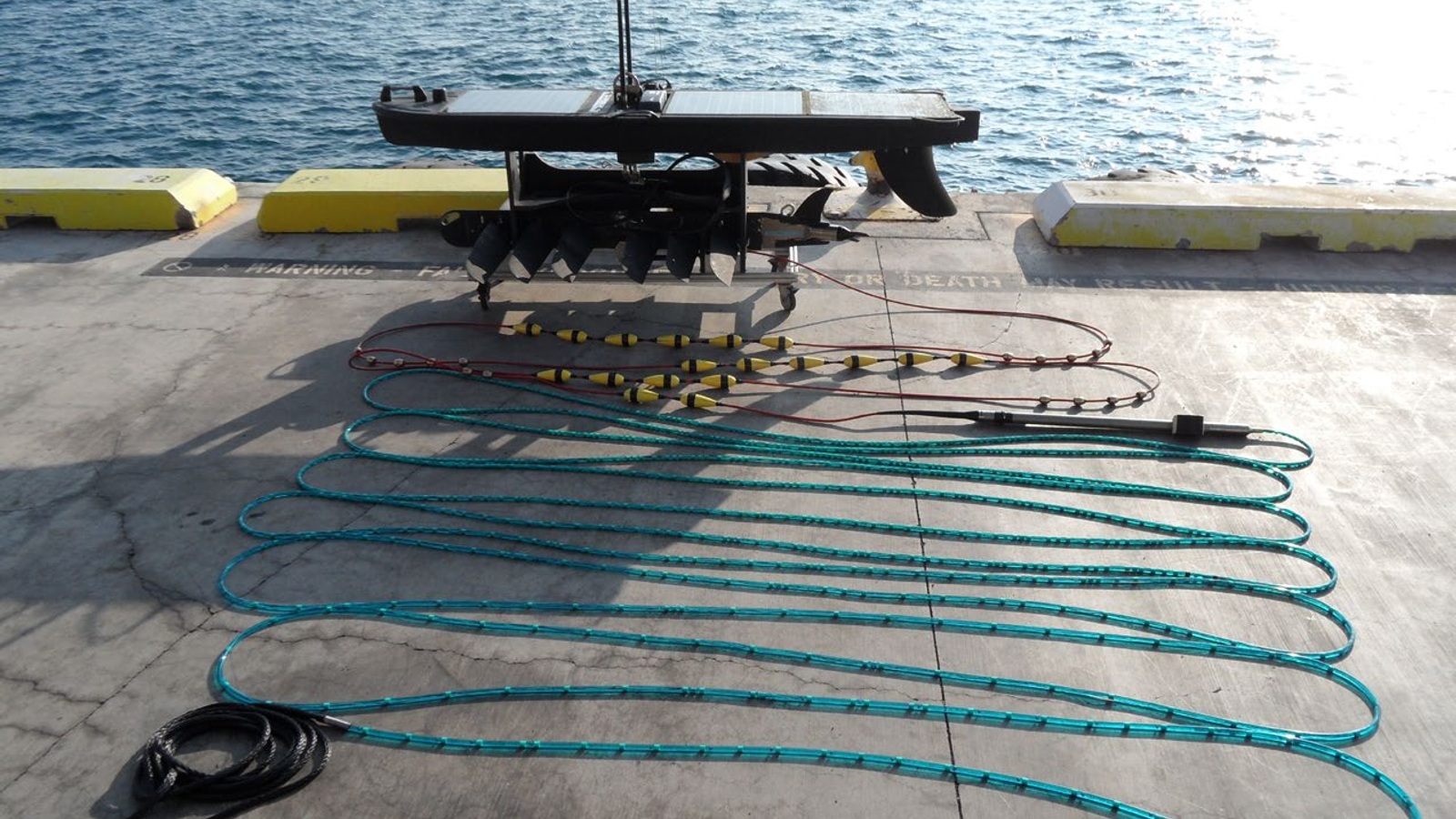
Wave Glider separates propulsion from electrical power: wave motion drives a submerged wing rack while solar panels charge batteries for sensors, navigation and communications. The surface float, powered umbilical and sub can follow routes, hold station and transmit data over satellite, cellular, Wi-Fi or line-of-sight radio for as long as a year.
The current family spans the compact SV3, the larger SV5 and 48-volt-capable SV6. Payload capacity rises from 70 kilograms and seven modular bays on SV3 to 450 kilograms and 40 bays on SV6, supporting oceanographic sensors, acoustics, weather instruments, surveillance and communications. Regulus manages vehicle autonomy and health; WGMS lets operators plan and supervise several vehicles and missions. Liquid Robotics is a Boeing subsidiary.
Articles
Products
- Wave Glider SV3
- Wave Glider SV5
Wave Glider
- Wave Glider SV6
Wave Glider
Operations
Orders & commitments
- Order / commitment
2026-02-17 - Liquid Robotics received a $25 million DoD contract to supply 20 commercial unmanned surface vehicles to Japan under a Foreign Military Sales program. - Wave Glider SV3 / commercial USVs - Japan USV procurement
Source
Supply
Supply chain relationships
- PNI Sensor
Inbound - Positioning & Navigation - PNI RM3100 sensors are used on Liquid Robotics Wave Glider unmanned surface vehicles for heading, pitch, roll and motion tracking
Source
Team
- Shane Goodenough - CEO
Timeline
Events
- 2026-05-07 - Org Change - Liquid Robotics plans headquarters and manufacturing move to Jessup
The facility is intended to expand production capacity for the company's Wave Glider fleet. The move will provide additional space for hiring and operational expansion; the company was recruiting for selected positions when it announced the plan.
Source - 2026-02-17 - Contract Award - Liquid Robotics Secures $25M DoD Contract for 20 USVs
On February 17, 2026, the U.S. Department of Defense awarded Liquid Robotics Inc. a $25 million contract to supply 20 commercial unmanned surface vehicles to Japan under a Foreign Military Sales program. The contract includes control software, payload integration, and launch and recovery equipment, with work scheduled for completion by February 16, 2028. The Air Force Test Center at Eglin Air Force Base is managing the contract.
Source - 2025-05-20 - Product Launch - Liquid Robotics launches Wave Glider SV5 USV
The SV5 is over five meters long and supports multiple payloads and complex configurations. The platform more than triples hull payload capacity compared with Wave Glider SV3. Liquid Robotics began accepting orders with initial customer deliveries scheduled for fall 2025.
Source - 2016-12-06 - Acquisition - Boeing agrees to acquire Liquid Robotics
Liquid Robotics brought wave- and solar-powered maritime robotic systems into Boeing autonomous systems work. The deal targeted long-duration seabed-to-space data collection and maritime awareness.
Source
Relations
Relationships
- Boeing
Current Parent - Boeing acquired Liquid Robotics, which continues to operate and sell the Wave Glider platform under its established brand.
- Japan Foreign Military Sales customer
Customer - Liquid Robotics $25 million DoD contract to supply 20 USVs to Japan.
Context
Comparable profiles
- Nordic USV AS
comparable profile - Uncrewed Marine Robotics
- Atlas Elektronik
comparable profile - Uncrewed Marine Robotics
- Subsea Fenix
comparable profile - Uncrewed Marine Robotics
- QinetiQ
comparable profile - Uncrewed Marine Robotics
Context tags
- Autonomous marine data collection - Capability - Wave Glider persistent ocean data collection.
- Uncrewed marine robotics - Peer Group - Wave Glider uncrewed ocean robot.
Commercial
- Liquid Robotics Secures $25M DoD Contract for 20 USVs
2026-02-17 · Order / contract · $25M obligated · 20
Source