
Asimov 1
About
About Asimov 1
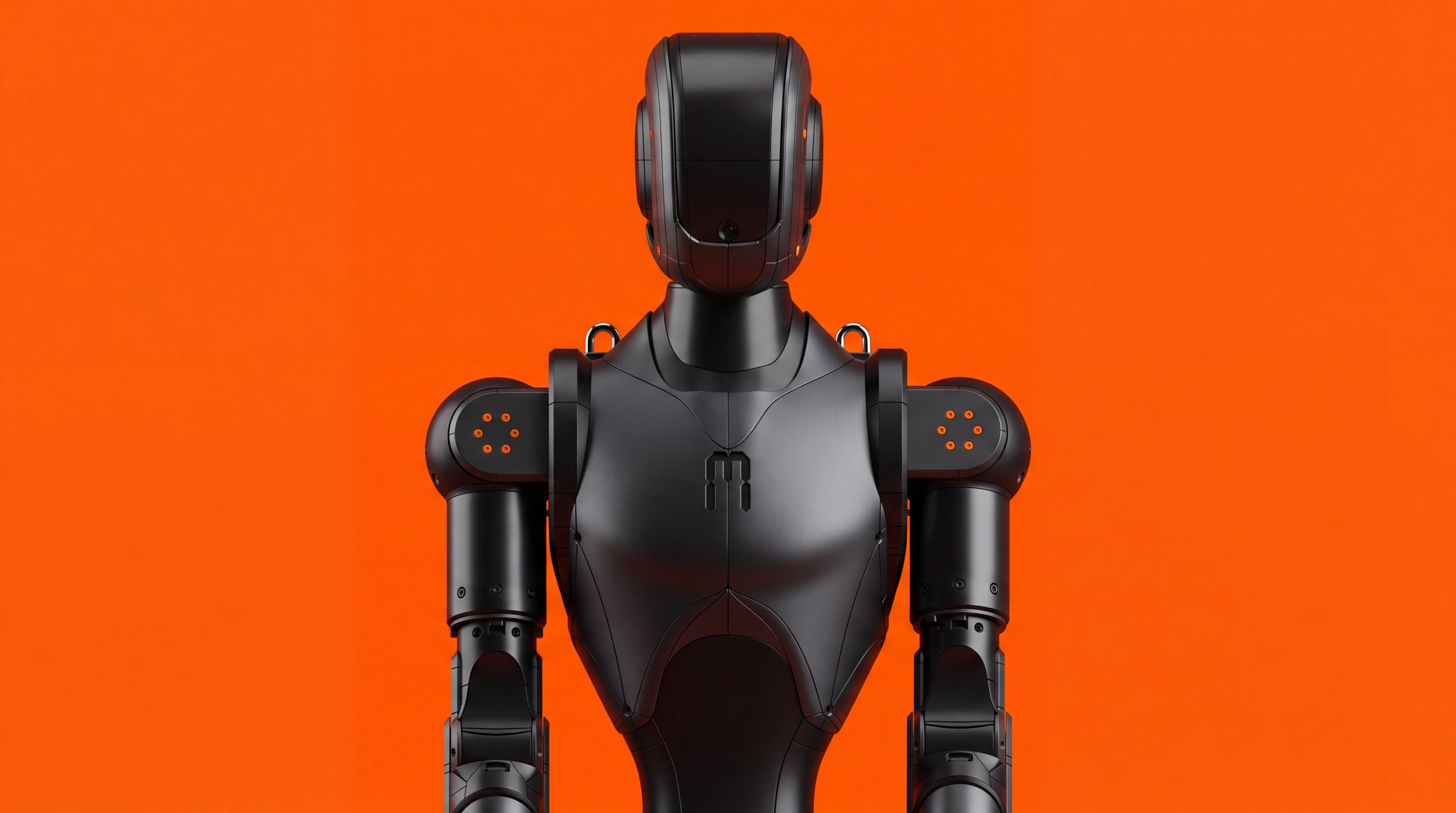
Asimov v1 is Menlo Research's open humanoid for robotics researchers, developers and laboratories. The platform combines a full-body hardware design with direct motor control, telemetry and simulation-to-real workflows. Teams can drive it with a joystick, run their own code or agents, and collect raw data during operation. The 1.2-metre robot is designed for hardware customisation and repair.
Menlo provides assembly instructions and a bill of materials for teams that want to build their own system. The company also offers assembled robots through a deposit and invoice process, with worldwide shipping and assembly or servicing partners in the United States and Singapore. Its development model combines working research hardware with parts access, repair guidance and local support.


Capabilities
Source-backed capabilities
- Weight lifting
Claimed - Perform weighted squats, bicep curls and arm raises within the manufacturer’s activity load ratings.
Source
Operations
- Shipments
Commercial orders and worldwide shipping - 2026-09-12 - developer DIY humanoid kit - Menlo Research accepts orders for Asimov 1, states that it ships worldwide and says units are already working in laboratories and workshops.
Source
Supply
Supply / Components
- Asimov initial leg build
Robot Joint Actuator - actuator - ENCOS - Menlo's initial Asimov leg build uses ENCOS actuators - source: menlo.ai
Source - Asimov 1
Embedded Compute - Compute & Control - Raspberry Pi - Raspberry Pi 5 handles media and networking in Menlo Research's Asimov 1 humanoid - source: docs.menlo.ai
Source - Asimov 1
Embedded Compute - Compute & Control - Radxa - Radxa CM5 runs motion control in Menlo Research's Asimov 1 humanoid - source: docs.menlo.ai
Source
Research
- Menlo SDK: Python control interface for Asimov 1
2026-10-09 - Research Publication - Menlo SDK is an Apache-2.0 Python interface for Asimov 1, exposing robot state, motion commands, joint trajectories and media interfaces. Version 0.1.0 is dated 9 October 2026 and checks model and Robot OS compatibility before control connections. The SDK’s public source is distinct from Asimov Edge and the earlier Asimov hardware repository.
Source - Running SONIC on Asimov
2026-09-28 - Research Publication - Menlo benchmarks SONIC inference on Asimov’s onboard RK3588-class CPU and describes integration beside its motor-control loop. A slimmed Asimov port is tested preliminarily on a physical robot supported by a safety harness.
Source - How we achieved zero-shot sim2real for Asimov
2026-08-27 - Research Publication - Menlo describes hardware, firmware and actuator-model changes enabling zero-shot locomotion transfer on physical Asimov 1 robots. The report covers flat and mildly uneven terrain across multiple units, with broader terrain and fleet consistency left open.
Source - From walking to flipping: Porting our RL stack from locomotion to manipulation
2026-08-05 - Research Publication - Menlo adapts its Asimov locomotion training machinery to a simulated two-arm carton flip on a moving conveyor. The method combines a privileged reinforcement-learning teacher, an adversarial motion prior and vision-student distillation with DAgger.
Source - Asimov open-sources v1 humanoid robot hardware and software
2026-04-27 - Research Publication - Asimov released v1 as an open-source humanoid robot containing mechanical CAD, electrical CAD, simulation model, and onboard software.
Source - Noise is all you need to bridge the sim-to-real locomotion gap
2026-02-12 - Research Publication - Menlo describes processor-in-the-loop testing for Asimov locomotion, running production firmware against emulated sensors, CAN communications and jitter. Physical lower-body rollouts illustrate walking and recovery using the trained policy.
Source - Teaching a humanoid to walk: The RL policy behind Asimov’s first steps
2026-02-03 - Research Publication - Menlo explains the observation contract, asymmetric critic and reward design behind its early Asimov locomotion policy. It models staggered motor-state timing and deploys an actor using signals available on the physical lower-body prototype.
Source - How we built humanoid legs from the ground up in 100 days
2026-01-28 - Research Publication - Menlo documents the mechanical development of Asimov’s modular legs, including actuator packaging, parallel ankle design and compliant passive toes. The report distinguishes the built lower-body subsystem from planned full-body integration.
Source
Resources
Curated durable documents and official technical references.
- Asimov 1 developer manual
WEB · Asimov 1 assembly, operation and development · Menlo Research
Source
Timeline
- Menlo demonstrates zero-shot sim-to-real locomotion on Asimov 1
2026-08-27 - Capability - Base policies ran onboard at 50 Hz, controlling 25 motors and sensors without external compute in the loop. Testing covered multiple units walking on flat ground, slight slopes and grass, with recovery from mild disturbances. Hardware changes included thermal fixes and a move to full SPI-CAN with an MCP2518FD controller to improve actuator communication.
Source - Menlo open-sources Asimov v1 designs and simulation model
2026-04-27 - Research Publication - The release-era platform measured 1.2 metres and 35 kilograms, with 25 actuated joints and two passive toe joints. Builders could use the bill of materials to source parts, including machined 7075 aluminium and MJF-printed PA12 nylon components. Mechanical files and simulation models were available, while electrical schematics, PCB files and a mobile app remained in development.
Source
Context
Market context
Asimov v1 is an open-source humanoid platform for embodied-AI experimentation, mechanical design, simulation and self-sourced builds.
- Target environment: Robotics labs, maker environments, education programs and embodied-AI research teams.
- Workflow context: Humanoid prototyping, simulation, open hardware experimentation, robot learning and platform iteration.
- Customer context: Researchers, developers, educators and builders seeking an open humanoid starting point.
- Deployment model: Open-source platform model with DIY kit or self-sourced build paths.
- Commercial maturity: Research and developer product surface.
- Adoption constraints: Adoption depends on build skill, documentation, parts availability, community support and safety.
- Market position: Open humanoid platform built around accessible mechanics, simulation and repairability.
- Adjacent products: LeRobot, WhalesBot Humanoid Research Kit, Unitree G1 developer use
Comparable Systems
- Walker Tienkung
UBTECH Robotics - humanoid robotics
- AI Sapiens K1
ROBOTIS - humanoid robotics
- KUAVO 4Pro
Leju Robotics - humanoid robotics
- Domo
Rotaku - humanoid robotics
- H2 Plus
Unitree - humanoid robotics
- TALOS
PAL Robotics - humanoid robotics